Return Responsibilities Between Retailers and Lab‑Grown Diamond Suppliers

Consumer returns create frequent friction across the lab‑grown diamond value chain, especially when finished jewellery reaches end buyers and unexpected refund requests emerge. Every return touches multiple parties, from end‑user complaints to downstream stock assessment, and unclear boundaries often trigger financial loss, delayed resolution and long‑term partnership tension. Many market participants overlook how consumer‑initiated returns flow backward through sales channels, and fail to set clear terms before order confirmation. This article breaks down practical workflows, cost allocation frameworks, and actionable standards for managing returned merchandise, drawing on real‑world experience from the production side, to help market participants separate unavoidable retail‑side obligations from negotiable terms with upstream stone and finished‑goods providers.

The full backward flow of consumer‑originated returns in lab‑grown diamond trades

When an end‑customer submits a return request, the whole workflow starts at retail points before moving step‑by‑step toward upstream stock sources. First, retailers collect consumer evidence including product photos, original grading documents, purchase receipts and return reason statements. Common consumer triggers cover changed personal preference, size mismatch, visual expectation gaps, surface scratches discovered after wearing, perceived quality inconsistency, and confirmed manufacturing defects such as loose stone setting or metal alloy discoloration.

Not every returned piece can travel back to the stone source. Custom‑engraved jewellery, resized rings, heavily worn items, goods missing original laser‑inscribed diamond certificates, and heavily damaged settings usually cannot re‑enter bulk supplier inventory. Retailers must conduct initial condition checks before opening discussions with upstream partners. If items arrive broken or altered by third‑party jewelers, suppliers will almost universally reject reverse take‑back, shifting all financial exposure back toward retail operators.

Many retailers mistakenly assume that any consumer return automatically qualifies for upstream credit or exchange. In reality, upstream partners only accept returned stones and finished pieces under narrow predefined conditions. Loose stones from lab made diamonds bulk orders follow different evaluation standards compared with fully assembled finished jewellery. Loose inventory without setting damage can often be restocked after re‑inspection, while mounted jewellery faces additional costs for stone removal, metal recycling, repolishing and reassessment of diamond grading integrity. Every backward shipment carries logistics risk, including transit loss, customs clearance delays across cross‑border markets, and inspection disputes over whether wear marks existed prior to consumer delivery.
Defining obligations that sit firmly on retail operators

Every retailer interacts directly with end consumers and bears core front‑line responsibilities that cannot be transferred to upstream partners. lab diamond retailer liability covers consumer communication, local regulatory compliance, primary refund execution, and pre‑return product screening work, regardless of whether final goods can be sent back to suppliers. Retail businesses own the contractual relationship with end buyers, so local consumer protection rules bind retail entities rather than distant stone producers.

Retail teams must manage full‑cycle consumer dialogue, collect required proof, process direct refunds or exchanges to shoppers, and handle all customer‑fused disputes. Even when a defect traces back to material or assembly work, retailers cannot redirect upset consumers to contact stone producers directly. Retailers also take charge of verifying returned item integrity before contacting suppliers, checking matching of laser inscriptions, original grading reports, metal hallmarks and full accessory sets such as boxes and appraisal documents. Missing certification paperwork creates large restoration costs, and most suppliers refuse to accept returns without complete matching documentation.

Cost categories belonging to retailers include consumer‑side return shipping expenses, platform penalty fees triggered by return cases, costs related to resizing, engraving removal and minor jewellery restoration work completed at retail workshops, plus full financial loss for items damaged by consumer misuse, accidental impact or third‑party jeweller modification. Custom‑modified goods represent one of the largest loss sources; once a ring gets resized at retail premises, upstream suppliers will decline reverse acceptance even if the diamond stone itself remains undamaged. Retail operators also absorb market‑value depreciation risk for inventory they cannot send upstream. When consumer returns cannot pass supplier inspection, retailers must decide whether to recondition and resell locally, dismantle pieces for component recycling, or write‑off stock entirely.

Retail operators also carry educational duties for front‑line sales staff. Misleading consumer expectations around lab‑grown diamond visual performance, durability or buy‑back options generate large volumes of avoidable returns. Clear disclosure around product specifications, certificate interpretation and return window limits reduces unnecessary return volume long before goods get shipped out to shoppers.

Negotiable terms built into formal commercial documentation

To prevent costly surprises, market participants should formalize flexible resolution options through properly drafted vendor return agreement before order execution. Oral arrangements create ambiguity once return events take place, and written contracts clarify which return scenarios qualify for partial credit, full return, exchange, or outright rejection. Negotiable clauses should cover eligibility windows, item condition benchmarks, restocking fee percentages, cross‑border return logistics allocation, defect verification protocols, and special rules for custom‑produced finished jewellery.

Parties can negotiate time windows for reverse shipments after retail‑side consumer returns complete. Many suppliers apply tighter timelines for bulk loose‑stone orders compared with made‑to‑order finished jewellery. The agreement should explicitly separate manufacturing defect cases from change‑of‑mind consumer returns. For confirmed production faults, retailers may negotiate full credit or free replacement; for consumer preference‑driven returns, suppliers can apply restocking deductions or limit exchange privileges rather than granting full refund.

Negotiation also covers who pays cross‑border return freight, insurance, import duties and re‑inspection lab fees. Some arrangements split logistics cost between both sides under defect conditions, while retailers carry all transit expense for non‑defective consumer returns. Additional negotiable points include acceptable tolerance levels for minor surface wear, rules for goods returned without original packaging, and partial‑credit mechanisms for items that suffer light damage and can only be dismantled for stone recovery. Suppliers and retailers may also negotiate limited‑volume trial return allowances for new partnership phases, helping retail partners test market reaction without extreme inventory risk. Even with well‑negotiated terms, retailers should understand that custom‑engraved, resized or heavily worn merchandise stays outside return scope in nearly all commercial frameworks.
Building balanced frameworks for collaborative business partnerships

Well‑structured cooperation depends on clear retailer‑supplier obligations that assign risk fairly across both sides. Suppliers cannot take over retail‑level consumer service work, yet they hold responsibility for material consistency, production quality control, and alignment between shipped goods and published grading certification. Retailers cannot push all post‑sale risk upstream, but deserve predictable remedies when products leave factories with confirmed production flaws.

From the perspective of a lab grown diamond jewellery manufacturer, standardized pre‑shipment inspection helps cut overall return frequency for downstream partners. Every loose stone and assembled jewellery piece should undergo grading cross‑checking before dispatch, confirming laser inscription consistency, setting firmness, metal surface finishing and certificate matching. Transparent pre‑order communication also helps retailers set proper consumer expectations. Manufacturers should clearly mark categories of goods excluded from return possibilities, such as fully bespoke custom jewellery built to unique consumer specifications.

When a return case emerges, structured inspection workflows reduce conflict. Once retailers finish consumer processing, they submit detailed photo evidence and condition reports to suppliers before shipping physical goods backward. This pre‑assessment step avoids wasted freight for items that will ultimately get rejected. If inspection identifies factory‑origin defects, parties activate pre‑agreed remedies including product replacement, store‑credit allocation, or partial financial compensation. If returns stem purely from consumer preference or retail‑side modification, retailers handle residual stock disposition locally.

Long‑term collaborative partnerships can build layered return frameworks. Higher‑volume ongoing accounts may secure more flexible reverse terms, while small‑batch orders follow stricter return limitations. All parties benefit from separating defect‑related remedies from general consumer return policies. Blending these two scenarios creates distorted risk allocation, where suppliers end up absorbing losses generated purely by end‑customer preference shifts. Both sides should also document every return case in shared records, tracking root causes to improve future production quality and retail‑side sales guidance.

Practical operational advice to minimize return‑related losses

Market participants can adopt several practical measures to contain return risk before goods reach end consumers. Retail operators should publish transparent consumer‑facing return policies, clearly stating return time limits, required item condition, exclusion for custom‑altered goods, and responsibilities for return shipment costs. Sales teams need consistent training to accurately describe lab‑grown diamond characteristics, setting realistic expectations for stone appearance, metal durability and what counts as acceptable minor surface features. Upstream production teams maintain strict QC procedures, double‑checking each stone’s grading document and laser inscription against physical goods before outbound shipment.

Prior to signing new purchase contracts, retail buyers should carefully review all clauses touching reverse logistics, defect remedy, restocking charges and excluded merchandise categories. Avoid relying on informal email promises; embed all negotiated return‑related arrangements inside formal order documentation. Retail teams should take high‑resolution photo archives of incoming inventory on receipt, documenting initial item condition, which serves as critical reference evidence if consumer returns appear weeks later.

When returns do happen, avoid rushed physical shipment of goods back to suppliers without pre‑approval. Complete digital evidence review first, confirm RMA authorization numbers, and strictly follow supplier packaging standards for reverse transit. Damages occurring during return transit often trigger bitter disputes over which party carries responsibility. Appropriate insurance for return shipments protects both retailers and suppliers from unexpected loss.

Even with thorough planning, some consumer returns remain unavoidable in fine jewellery markets. The core goal is not eliminating returns entirely, but building predictable risk distribution so neither side bears unfair financial burden. Retailers fulfil direct‑to‑consumer duties, while suppliers deliver remedy for confirmed production faults within agreed contract boundaries. Clear division of responsibilities preserves commercial trust and keeps lab‑grown diamond supply‑chain operations stable for all participating stakeholders.
Advantages and Limitations of Sourcing Fancy‑Shape Lab‑Grown Diamonds as Stock Goods

The jewellery industry continues to shift toward more distinctive stone profiles as consumer interest moves beyond standard round‑brilliant cuts. Marquise, shield, triangle and other niche fancy‑shape lab‑grown diamonds have become central to differentiated product lines, statement engagement pieces and vintage‑inspired collections. Holding ready‑to‑ship stock of these non‑standard cuts creates tangible competitive edges yet carries notable operational trade‑offs for those building physical inventory. From raw material yield to supplier stock depth, every purchasing decision shapes production lead times, finished‑goods profitability and order fulfilment capacity. This article breaks down practical upsides and real‑world constraints when building stock portfolios centred on fancy‑shape lab‑grown diamonds.

Expanded Design Diversity for Market Differentiation

Working with fancy‑shape lab‑grown diamonds opens broad creative space for developing collections that stand apart from mass‑market jewellery offerings. Elongated marquise profiles visually enlarge finger coverage, sharp‑angled shield cuts deliver bold geometric silhouettes, while triangle stones serve as versatile accent components for multi‑stone layouts, halo assemblies and side‑stone pairings. Natural fancy‑shape diamonds suffer from inherent scarcity; matching calibrated sizes, consistent colour grades and clean clarity tiers frequently requires weeks or months of cross‑dealer searching, with no guarantee of locating well‑matched stone parcels. Lab‑grown production removes much of this randomness. Growers can orient rough crystal formation specifically toward target fancy‑shape dimensions rather than only optimising for round yield.

Access to varied fancy‑shape profiles directly supports lab diamond jewelry wholesale project pipelines, enabling faster turnaround for custom commissions and pre‑fabricated finished lines alike. When suitable stones sit in existing stock, design teams can iterate quickly without waiting for custom cutting cycles. Jewellery creators can sample multiple shape combinations for CAD visualisation, adjust stone‑setting layouts and present tangible stone options to downstream partners. This creative flexibility proves particularly valuable during seasonal trend cycles when unusual geometric cuts gain sudden consumer traction. Instead of declining complex custom requests due to stone availability limits, businesses with curated fancy‑shape stock can accept higher‑margin bespoke assignments that competitors cannot easily fulfil.

Cost Structure and Margin Opportunities for Stock‑Based Operations

Cost frameworks represent one of the most compelling reasons to build fancy‑shape lab‑grown diamond stock compared to equivalent natural fancy‑shape inventory. Natural fancy‑shape polished stones carry heavy premiums driven by low rough yield, limited global output and fragmented distribution channels. Even mid‑tier marquise or shield‑cut natural stones command steep per‑carat pricing, making large‑scale stocking financially prohibitive for most operations. Lab‑grown counterparts deliver comparable physical, optical and grading properties at substantially lower entry costs, lowering the capital barrier for holding diverse shape assortments.

Well‑managed stock sourcing supports healthy gross margins for finished jewellery output. When buying through established channels for synthetic diamonds wholesale, buyers gain access to volume‑based price breaks for mixed‑shape parcels, reducing per‑unit costs for stones used across high‑volume production runs. It is important to note that not all fancy‑shape lab‑grown stones share identical cost profiles. Highly complex cuts with excessive material waste during polishing will still carry higher polishing fees. Shield, triangle and kite‑style cuts demand precise facet alignment and skilled labour; poorly executed polishing produces uneven light return and visible performance defects that devalue finished jewellery. Savvy stock buyers prioritise parcels pre‑audited for cut quality, rather than only chasing lowest per‑carat figures, to avoid downstream rejection rates during quality‑control checks. Lower base material costs create margin room, yet profit outcomes ultimately hinge on avoiding bad stock purchases that cannot be deployed into sellable finished goods.

Evaluating Vendor Stock Capacity Across Niche Fancy‑Shape Categories

Supplier stock depth varies drastically across the lab‑grown diamond sector. Most large‑scale producers prioritise round brilliant and popular fancy shapes such as oval and pear for primary inventory. More specialised profiles including shield, triangle and elongated marquise frequently exist only in limited quantities, even among sizable vendors. Many suppliers produce these niche shapes predominantly against customer orders instead of maintaining continuous shelf inventory, because low historical demand discourages capital lock‑up on slow‑moving polished goods.

When assessing potential partners, practical due diligence extends beyond published online catalogues. Catalog photos often represent sample stones rather than confirmed available inventory. Reliable vendors should provide granular inventory manifests listing exact carat ranges, colour‑clarity combinations, certificate references and physical quantities per shape category. Buyers need to verify whether listed stock resides in local warehouses or requires overseas production and polishing lead times. Some market participants advertise broad fancy‑shape selections but fulfil most requests via post‑order polishing cycles instead of immediate shipment.

Production yield remains a core limiting factor. Cutting niche fancy‑shapes generates higher rough wastage compared to round‑brilliant processing. Even with controlled lab‑grown rough input, consistent output of calibrated matched pairs stays technically demanding. Matched pairs for three‑stone rings or symmetrical earring sets create extra pressure; locating two stones with identical dimension, facet proportion and colour zoning from existing stock is far harder than sourcing individual single stones. Buyers must distinguish suppliers who can supply matched‑pair inventory from those who only assemble pairs from separate custom‑polish batches, which extends lead‑times and introduces higher risk of visual mismatch in finished settings. Understanding these internal production realities helps set realistic expectations for what stock can realistically deliver versus what must be built through custom‑order workflows.

Core Challenges Around Production and Inventory Management

Despite meaningful advantages, stocking fancy‑shape lab‑grown diamonds brings significant operational hurdles, with fancy shape supply stability standing as one of the most persistent industry pain points. Even vendors with occasional large parcels of niche cuts can experience rapid stock depletion. Once existing polished inventory sells out, replenishment may require new crystal growth cycles followed by specialised polishing. Depending on growth technology, reactor scheduling bottlenecks and polishing workshop backlogs, restock lead‑times can stretch from several weeks to multiple months. Unlike round stones that can be replenished on short notice, exotic fancy‑shape stock cannot always be quickly refilled to maintain consistent availability for ongoing production orders.

Demand volatility amplifies these sourcing complications. Social‑media‑driven jewellery trends can suddenly spike interest in one obscure fancy shape for several months, then fade equally fast. If businesses heavily invest in stock around a temporary trend, leftover stones can sit unused for extended periods. Sharp‑pointed fancy‑shape stones such as marquise and triangle also introduce manufacturing risks. Thin points chip easily during setting, polishing and quality‑handling workflows. Higher stone damage rates increase effective cost per usable stone, as some inventory will be damaged before ever reaching finished‑goods assembly. QC protocols must be adjusted specifically for fancy‑shape stock to inspect point integrity, facet alignment and symmetry before stones enter production.

Capital allocation represents another serious consideration. Fancy‑shape stock ties up working capital across dozens of size‑colour‑clarity permutations. To offer comprehensive selection, buyers need inventory spread across multiple carat weights, colour grades and clarity tiers for marquise, shield, triangle and other geometric profiles. Most of these individual SKUs turn over at slower rates than round‑brilliant stones. This creates fancy shape inventory risk, where substantial funds become locked inside polished stock that cannot be liquidated quickly if market preferences shift or project pipelines slow down. Over‑buying lesser‑known fancy‑shape categories creates stagnant inventory that weighs on cash flow, even when the stones themselves carry acceptable wholesale pricing.

Strategic Approaches to Mitigate Fancy‑Shape Sourcing Weaknesses

Businesses can take concrete steps to balance opportunity and exposure when building fancy‑shape lab‑grown diamond stock portfolios. Hybrid sourcing models offer one proven approach: maintain limited core inventory for highest‑velocity fancy‑shape SKUs while reserving more obscure sizes and grades for made‑to‑order procurement. This strategy guarantees fast fulfilment for frequently requested specifications, without overexposing capital to slow‑moving niche inventory. Buyers should map historical order data to identify which fancy shapes, carat ranges and quality combinations actually convert into finished sales, and limit physical stocking primarily to these high‑turn segments.

Diversifying supplier relationships further reduces vulnerability to single‑vendor stock gaps. Aligning with multiple lab‑grown diamond vendors means that if one partner exhausts shield‑cut or triangle‑cut inventory, alternative sources may hold usable stock or have open polishing capacity. Each supplier possesses different strengths: some maintain better CVD fancy‑shape stock, others excel at HPHT geometric profiles. Formal sample evaluation before committing to large‑parcel purchases is essential. Request physical sample stones representing target stock lots to assess light performance, point durability and polishing quality, rather than making large buying decisions relying solely on digital photos and certificate documentation.

Clear internal forecasting practices also reduce negative inventory outcomes. Track trend momentum for each fancy‑shape category, and build predefined stop‑loss thresholds for slow‑moving stock. When certain fancy‑shape SKUs sit unsold beyond set timeframes, develop secondary commercial pathways such as bundling within promotional finished‑goods lines or transferring stock toward custom‑order‑only pools. Quality‑control workflows should include separate inspection checkpoints for fancy‑shape specific risks, including point chipping risk assessment, symmetry verification and facet alignment review. These preventive steps lower reject rates during jewellery assembly and preserve value of purchased inventory.

Thoughtful contract terms with vendors can also soften downside exposure. Where possible, negotiate partial flexibility on mixed‑shape parcels, return conditions for materially non‑conforming stones and transparent communication timelines for replenishment estimates. Reputable suppliers will openly communicate when certain fancy‑shape items cannot be quickly restocked, enabling production planning teams to set realistic delivery timelines for downstream clients.

Balancing immediate stock availability against capital exposure defines successful fancy‑shape procurement. Fancy‑shape lab‑grown diamond inventory delivers powerful differentiation potential for jewellery production, supporting unique product lines and faster custom‑order execution. Still, businesses cannot overlook uneven vendor stock depth, variable supply‑chain lead‑times, higher polishing‑related waste and inherent inventory risk of low‑velocity niche stone categories. Careful supplier vetting, data‑driven stock planning and hybrid stock‑plus‑custom‑order workflows allow operators to capture creative and commercial upsides while keeping operational risks within manageable boundaries.

How Pre‑order Sample Testing Protects Jewelers From Costly Diamond Order Risks

Market volatility and inconsistent stone grading continue to create expensive pitfalls for jewelers sourcing large volumes of lab grown diamonds. Many buyers rely solely on digital specification sheets and lab certificates to finalize bulk purchases, only to receive parcels with mismatched color, poor cut performance, or hidden internal defects that cannot be observed from static images. Even trusted grading documents cannot fully capture real‑world visual performance under retail lighting, which directly shapes customer satisfaction and final sales revenue. Physical sample evaluation bridges this gap, giving jewelers tangible proof of quality before committing capital to sizable inventory orders. Without structured sample assessment, businesses face write‑offs, returned finished goods, damaged brand reputation, and lengthy delays when unsuitable diamond parcels arrive at their workshop.

Real‑world risks hidden behind digital diamond specifications

Online product listings and lab reports deliver precise numerical data, yet they cannot replicate how diamonds behave under store lighting, studio shoot lighting, or everyday ambient light. CVD and HPHT lab grown diamonds can show subtle color zoning, faint brown undertones, or uneven facet alignment that rarely appears on standard grading documents. These subtle flaws become extremely obvious once stones are set into finished jewelry, especially for pieces assembled with multiple matched melee stones. When dozens of small diamonds must sit side‑by‑side, minor variations in color or brilliance compound into noticeable visual inconsistency that customers will quickly spot.

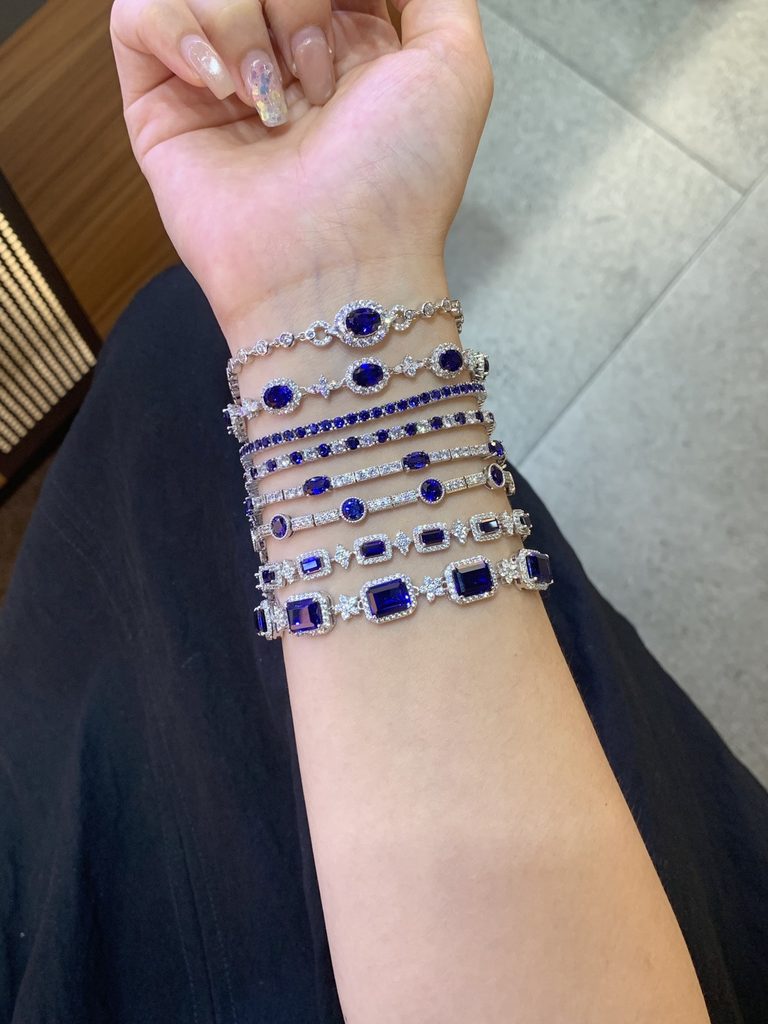
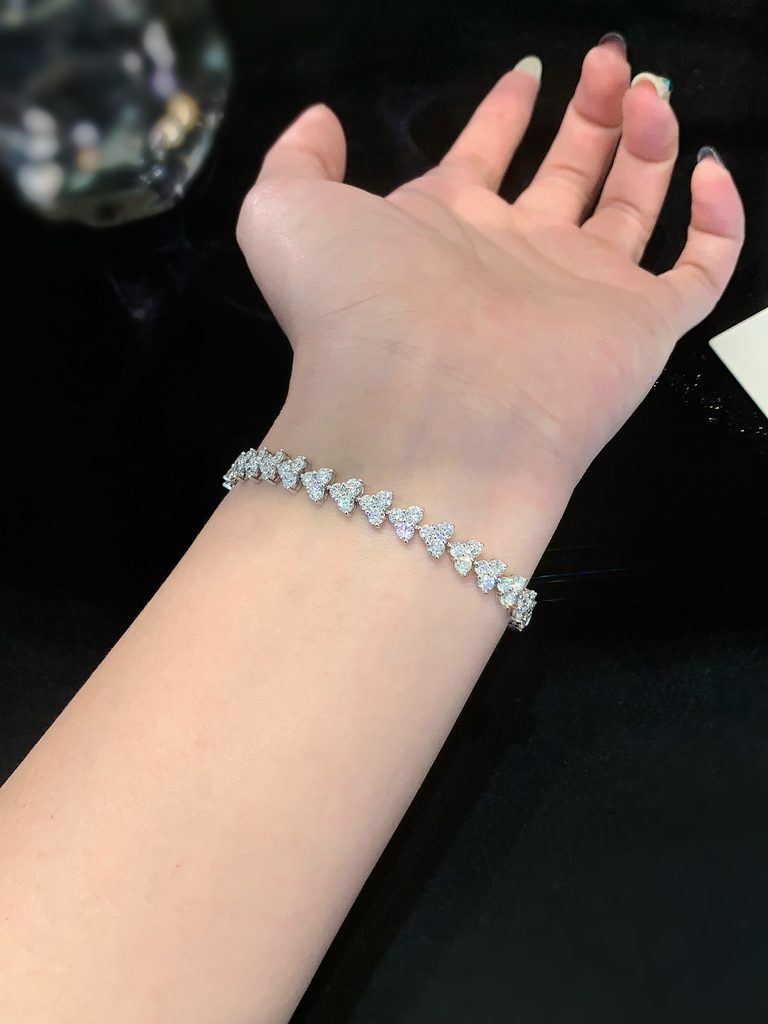
Projects built around coordinated multi‑stone layouts carry particularly high risk. A diamond factory tennis bracelet requires every individual melee stone to maintain matching diameter, color grade, and light performance across the full length of the piece; one or two off‑grade stones within the parcel can ruin the uniformity of the final assembly. Similar challenges apply to a gold bangle bracelets wholesale, where pavé‑set surfaces demand consistent sparkle from every stone to preserve the premium visual appeal expected by retail shoppers. Sourcing stones based purely on spreadsheets and certificate summaries frequently results in costly re‑setting work, wasted metal components, and rejected finished stock that cannot sell at target price points.

Jewelers also face supply‑chain risks including mixed‑grade parcels, slight deviations from stated dimensions, and stones whose laser girdle inscriptions do not perfectly match attached paperwork. These issues may stem from human error during parcel packing rather than intentional fraud, yet the financial impact lands entirely on the purchasing jeweler. Large orders lock up significant working capital, so correcting mistakes after shipment creates cash‑flow pressure that small‑to‑mid‑size jewelry operations struggle to absorb. Running through a structured physical review workflow eliminates most of these avoidable losses.

Practical execution of pre‑order sample assessment

A complete sample evaluation combines visual observation, dimensional measurement, and document cross‑referencing, rather than relying on any single check point. When samples arrive, jewelers should first clean every stone thoroughly with lint‑free cloth to remove surface grease and dust; surface residue distorts color perception and hides fine facet details that are critical to proper assessment. Working surfaces should use neutral‑toned matte backgrounds, and testing should happen under multiple light sources including natural daylight, warm retail store lighting, and cool studio illumination to simulate real‑life viewing conditions customers will experience.

Lab diamond fire observation forms a core segment of hands‑on stone review. Fire describes the colored spectral flashes produced when light disperses across diamond facets, and it varies dramatically based on cut precision, even among stones sharing identical grading report scores. Jewelers rotate each sample slowly under varied lighting to gauge fire intensity, distribution, and consistency across the sample set. Some stones with acceptable grading marks deliver weak, uneven fire, translating to lifeless‑looking finished jewelry that fails to impress retail buyers. Comparing multiple sample stones side‑by‑side makes subtle differences far easier to detect than evaluating stones one at a time.

Sample quality verification extends past visual sparkle inspection to cover hard physical parameters. Evaluators measure stone diameters and depths with calibrated gauges, cross‑check weight against electronic scales, and use 10× magnification loupes to examine surface polish, facet junction sharpness, and visible internal inclusions. Laser inscriptions on the girdle must be located and read carefully. Any measurable deviation beyond accepted industry tolerances signals potential inconsistency within the full bulk parcel. This process also helps jewelers separate stones that appear clean on paper yet display distracting visible defects when viewed face‑up.

Pre‑order lab diamond check does not end with loose‑stone inspection. Whenever possible, jewelers should mount sample stones into test settings matching their intended final jewelry designs. Setting metal changes perceived stone color and brilliance; white gold, yellow gold, and rose gold settings each alter visual output in distinct ways. Stones that perform beautifully loose may lose significant sparkle when secured in pavé or bezel mounting styles. Test mounting reveals setting‑related challenges such as stones that sit too high, stones prone to chipping during assembly, or melee stones with inconsistent heights that create uneven bracelet surfaces. This small‑scale mock‑up work prevents massive rework expenses after bulk stone delivery.

How to formally request valid test samples from lab grown diamond vendors

Many jewelers hesitate to ask for physical samples, fearing complicated negotiation, high deposit fees, or long lead‑times. Well‑structured sample requests create mutual benefit for both parties: vendors receive clear quality benchmarks, and jewelers avoid costly return disputes on large shipments. Clear communication from the initial inquiry lays the foundation for meaningful sample evaluation.

Start by defining your exact project parameters before reaching out. Document target carat range, shape, color and clarity brackets, preferred cut grade, growth method specification (CVD or HPHT), and intended jewelry application. If you are developing tennis or bangle‑style bracelet products, specify that you need matched melee representative samples reflecting the exact stone dimensions you plan to order in bulk. Explicitly state that you require stones pulled directly from the same production batch reserved for your potential large‑volume order. Samples pulled from unrelated inventory offer little predictive value for your final parcel.

Transparently discuss sample terms including shipping costs, security deposit requirements, sample return windows, and whether deposits apply as credit toward your future bulk purchase. Reputable suppliers commonly offer refundable deposit arrangements for qualified wholesale buyers. Clearly communicate your testing timeline, and specify what outcomes will trigger moving forward to full order placement or declining the batch. Request copies of corresponding lab reports alongside physical samples so you can immediately begin cross‑checking physical stones against official documentation.

When samples arrive, preserve all original packaging and paperwork throughout your assessment phase. Keep records of every observation including photos and short video clips taken under different lighting environments. These records serve as objective reference points should inconsistencies emerge later during full‑order delivery. If sample stones display undesirable traits, share your documented findings openly with the vendor rather than simply canceling communications. Professional suppliers will adjust batches, offer alternative grade options, or propose modified specifications to align with your real‑world quality expectations. Constructive feedback strengthens long‑term supplier partnerships.

Avoiding common missteps during sample‑based decision making

Even with physical samples in hand, jewelers can make misjudgments that undermine risk‑reduction goals. One widespread mistake is testing only one single stone to judge an entire multi‑stone parcel. Melee‑heavy orders for bracelet‑style jewelry require reviewing multiple representative stones, as minor batch variation naturally occurs across dozens of production units. Testing one stone cannot reveal color drift or size inconsistency across a full parcel intended for matched‑setting work.

Another frequent error is completing evaluations under only one lighting environment. A diamond that looks brilliant under bright overhead office lighting can appear dull and lifeless inside warm‑toned retail shop displays. Always cycle through varied lighting conditions to replicate the full range of environments your end customers will encounter. Avoid making final judgments on dirty or oily stones; skin oils accumulated during handling will mask true fire and clarity characteristics.

Jewelers should also resist over‑relying on vendor‑provided pre‑edited photos and videos as a replacement for physical sample work. Media files can be color‑corrected, filtered, or shot under optimized lighting to hide real‑world weaknesses. Digital assets work best as supplementary reference material, never as a full substitute for hands‑on sample assessment.

Sample testing also helps set realistic internal expectations for your finished product lines. You may discover that certain grade combinations perform visually worse than anticipated, prompting small specification adjustments before you lock in large‑scale purchasing. Tweaking color‑clarity‑cut parameters based on tangible sample feedback protects your profit margins and ensures retail‑ready merchandise meets your brand quality standards.

Translating sample insights into secure large‑order execution

Once samples pass your complete evaluation workflow, translate your observations into precise written order specifications shared with your diamond supplier. Reference the exact batch your test samples came from, and document any visual benchmarks you observed during assessment. Note acceptable tolerance ranges for stone dimension, weight deviation, and color consistency. Explicitly require that the delivered bulk parcel maintains the same visual quality demonstrated by your approved samples.

Build contingency clauses into your purchasing agreement where feasible. Confirm protocols for addressing batch inconsistency should the delivered goods deviate materially from your approved sample set. Even with thorough pre‑order work, perform spot‑checks immediately upon bulk parcel arrival. Compare random stones from the shipment side‑by‑side against your original approved physical samples. This final checkpoint catches packing‑related mix‑ups before stones move into workshop setting workflows.

Businesses that embed systematic sample review into their sourcing protocols reduce unexpected losses, stabilize product quality, and build more predictable inventory cycles. While sample processing adds short‑term lead‑time and minor logistics expense, those costs pale against the financial damage of receiving thousands of dollars worth of poorly performing lab grown diamonds that cannot be turned into sellable finished jewelry. For jewelers building competitive product lines around lab grown diamond bracelets, rings, and other multi‑stone designs, disciplined sample assessment is not an optional luxury, but a practical risk‑management necessity.

Differences Between Resellers and Direct‑Factory Lab‑Grown Diamond Supply Partners

The global demand for man‑made diamond stones keeps expanding across jewelry markets, pushing more businesses to hunt for reliable stone sources. Many buyers find themselves confused when sorting through countless offers online. Some parties claim to hold production capacity while others operate purely as middle channels, and surface‑level information often fails to expose hidden gaps in cost, quality control and service capacity. It is critical for every buyer to unpack how different supply models operate, so they can make well‑informed decisions before committing to large‑scale orders. This article breaks down real‑world operational gaps between resellers and direct‑factory supply partners, covering pricing structures, order flexibility, quality management, technical support and risk‑avoidance tips for real‑world procurement scenarios.

Cost structures and hidden markup across supply chains

Pricing remains one of the most tangible distinctions between resellers and direct‑factory supply partners. Resellers acquire finished lab‑grown diamond parcels from multiple production bases and add their own profit margin before passing goods onward to downstream buyers. Multiple layers of circulation can gradually lift final unit prices, especially for special specifications such as fancy shapes, fancy color stones and high‑grade melee parcels. Even with identical 4‑C parameters and matching grading certificates, quotations from resellers can sit noticeably higher compared to offers coming straight from production facilities.

Direct‑factory partners skip intermediate circulation links. Cost calculation starts from rough diamond growth, polishing labor, gem lab certification fees and internal quality screening expenditure. Without extra profit layers inserted in‑between, buyers gain access to baseline wholesale rates. This advantage becomes more obvious with recurring bulk orders. Still, buyers should not assume every low‑quotation automatically represents genuine factory output. Some market participants copy factory‑style price lists but source all inventory externally, creating misleading price signals for inexperienced purchasers. Buyers need to compare price ranges against prevailing market benchmarks and cross‑verify supporting evidence rather than judging supply status purely by quoted numbers.

MOQ flexibility and order fulfillment capability

Order volume rules vary greatly depending on which supply type you select. Resellers aggregate stock from many different production sources, so they can combine small batches from several factories to fulfill mixed‑specification small orders. This feature makes resellers suitable for businesses testing new product lines with limited capital, or buyers who need scattered stone specifications without planning large‑volume purchases. Resellers can assemble mixed parcels combining multiple carat weights, shapes and color‑clarity combinations quickly, without requiring buyers to hit high single‑order thresholds set by individual production workshops.

Even so, reseller inventory advantages carry built‑in limits. Most resellers do not control raw rough stock or polishing schedules. When certain popular specifications run short in the market, resellers cannot adjust production plans to fill gaps. They have to wait for new stock releases from upstream producers, which may cause unpredictable delivery delays. For buyers working with direct‑factory lab diamond, production schedules can be adjusted within reasonable ranges according to actual order demands. Production facilities can allocate rough material and arrange polishing workflows for target specifications. While many genuine production sites set baseline order thresholds for formal bulk projects, they can adjust terms for long‑term cooperative clients. Some factories also support sample parcels for serious partners to inspect physical quality before formal mass procurement. Lead time transparency stands out as another key point: factory partners can share real‑time progress on rough growth, polishing cycles and certification scheduling, while resellers often cannot offer precise granular timelines since they fully depend on upstream delivery performance.

Quality control execution and product traceability

Quality consistency represents a core pain point for stone procurement. Resellers receive finished stones from scattered upstream origins. They typically conduct superficial visual checks and verify certificate surface information, yet they rarely participate in on‑site production supervision. When mixing goods from multiple factories into one single parcel, subtle differences in polishing precision, fluorescence performance and proportion parameters can appear across stones within the same consignment. Once quality inconsistency emerges, resellers must negotiate backward with upstream producers, which lengthens resolution cycles and creates extra uncertainty for downstream operations.

Direct‑factory supply partners carry out quality management throughout the full production workflow. Internal inspection teams monitor rough diamond screening, polishing parameter control, post‑polishing sorting and pre‑shipping re‑checks. Every production batch retains internal records linking rough origin, polishing workshop logs and gem lab certification numbers. Buyers can request batch‑level trace documentation for their purchased parcels. When working with lab‑grown diamond vendor, purchasers should confirm whether their potential partner can provide batch‑specific inspection records beyond only standard IGI or GIA certificates. Independent grading certificates confirm individual stone grading results, yet internal batch records demonstrate consistent execution of internal quality standards. Buyers can also request short video inspections of physical parcels to observe stone performance under different lighting conditions before shipment, reducing the risk of mismatches between online pictures and actual received goods.

Customization and technical adjustment support

Custom‑cut requirements frequently emerge for modern jewelry projects. Many brands need stones with non‑standard table percentages, modified depth ratios, special fancy shapes or calibrated melee dimensions for particular jewelry settings. Resellers face natural constraints in this area. Since they only trade existing finished inventory, they can only search among already‑polished stock for stones close to target specifications. Major parameter revisions cannot be completed, as resellers own no polishing equipment or technical teams. If matching finished goods cannot be found in existing market stock, resellers need to outsource custom requests to factories, adding extra communication steps, extended lead time and additional service charges.

Direct‑factory partners own in‑house polishing teams and technical personnel. Buyers can submit detailed technical requirements including proportion ranges, girdle thickness targets, special facet arrangements and color‑clarity tolerance ranges. Technical teams evaluate feasibility, calculate yield rates and offer realistic lead‑time estimates. Buyers receive clear feedback on potential trade‑offs between target parameters and finished‑stone yield. Custom fancy‑color CVD or HPHT stones can also be arranged according to client‑defined color targets, subject to technical feasibility. This level of hands‑on technical adjustment is the core distinction reflected in lab diamond supplier difference. Resellers relay demands, while factory‑based partners directly execute technical adjustments on production workflows.

After‑sales handling and risk mitigation strategies

Order disputes can occur in international stone trading for various reasons, such as transportation damage, deviation between expected and actual visual performance, or certificate‑matching issues. Resellers act as intermediate agents in after‑sales scenarios. They pass client feedback upstream and wait for upstream replies, which creates multi‑step communication loops. Final resolution outcomes depend entirely on attitudes from original producers, and resellers hold limited authority to make independent compensation or re‑work decisions. Some resellers may shift responsibility when facing complicated quality complaints, leaving buyers trapped between different parties.

Direct‑factory supply partners take direct accountability for goods leaving their facilities. Communication happens directly between buyers and the team responsible for manufacturing and inspection. Problem investigation proceeds without third‑party relays. Valid quality issues can trigger solutions ranging from partial compensation, re‑polishing services to stone replacement according to agreed terms. Even so, buyers should clarify after‑sales clauses before order confirmation. Key points include rules covering transportation risk allocation, time windows for quality claims, handling standards for stone chipping during post‑receiving setting work, and policies for custom‑produced goods which cannot be resold to other clients. Clear written agreements prevent ambiguous expectations once projects move forward.

Practical tips to identify genuine factory supply partners

Numerous market participants advertise themselves as factory sources while operating purely as resellers. Buyers need practical methods to verify real operational background during lab grown diamond sourcing. Request verified documentation showing production‑related resources, such as workshop footage, rough‑material storage areas and polishing station views, rather than only generic promotional photos downloaded from public channels. Ask targeted technical questions about CVD growth parameters, HPHT pressure environments, polishing yield rates for special shapes and fluorescence control solutions. Resellers often give vague general answers, while genuine factory teams can provide specific technical explanations.

Check how the supplier responds to non‑standard technical requests. If every special‑parameter requirement receives replies that only existing stock can be offered, this acts as a strong signal of reseller‑mode operation. In contrast, real production sources can discuss feasibility, yield loss and time cost for custom demands. Buyers can also place small sample‑size test orders first. Observe product consistency, documentation completeness and reaction speed when minor adjustment requirements arise. Test orders expose real service quality far better than marketing introductions on web pages.

Every supply model carries its own set of strengths and applicable scenarios. Resellers deliver value through convenient mixed‑spec small‑order access, which fits short‑term trial‑run projects. Direct‑factory lab diamond brings advantages in unit cost control, deep customization capacity, traceable batch quality and responsive direct after‑sales support, ideal for buyers pursuing stable long‑term supply chains. No single option suits every business. Buyers should match supplier type to their own order scale, technical complexity and long‑term business goals, rather than blindly chasing low quoted prices or impressive marketing slogans. Careful pre‑order due diligence always reduces expensive mistakes in international diamond wholesale procurement.

How Jewelers Make Preparations for Seasonal Demand Spikes

The global jewelry industry operates on distinct seasonal cycles, with consumer purchasing surging dramatically during major holiday windows. From Christmas and New Year celebrations to Valentine’s Day and Thanksgiving gifting seasons, jewelers consistently face sudden, large-scale order increases that can overwhelm unprepared production and supply chain systems. For jewelry manufacturers, seasonal demand spikes represent both lucrative growth opportunities and significant operational challenges. Failure to align production capacity, raw material supply, and product scheduling with market fluctuations can lead to delayed shipments, inventory shortages, compromised product quality, and lost market share. To maintain stable operations and maximize holiday sales potential, professional jewelry manufacturers adopt systematic, forward-thinking preparation strategies centered on strategic supplier collaboration, inventory planning, and production optimization.

Data Driven Demand Forecasting for Holiday Production Planning

Accurate demand forecasting forms the foundation of all seasonal preparation work for jewelry manufacturers. Unlike retail brands that focus on consumer sales trends, manufacturers need to analyze multi-dimensional data to predict upcoming holiday jewellery orders and allocate resources scientifically. Effective forecasting covers historical order volumes, regional holiday consumption habits, popular jewelry styles, and emerging market trends over the past three to five years. For example, necklace styles, especially delicate and elegant diamond necklaces, always dominate holiday gifting lists, driving steady bulk procurement demands every peak season.

Manufacturers typically divide the annual peak season into two core phases: the year-end winter holiday season spanning October to December and the romantic gifting season centered on Valentine’s Day in February. Each phase features unique product preferences and order characteristics. Winter holidays prioritize versatile, luxury jewelry suitable for family gifts and self-rewards, while early-year holidays focus on romantic, delicate diamond accessories. By sorting and analyzing historical order data, manufacturers can accurately identify high-demand products, core diamond specifications, and order delivery cycle requirements, avoiding blind production and inventory waste. This data-driven approach also helps manufacturers reserve sufficient production cycles and raw material stock to cope with sudden order surges, ensuring every holiday order can be completed on schedule with stable quality.

Strategic Vendor Evaluation and Seasonal Partner Screening

The stability of raw material supply directly determines a manufacturer’s peak-season production capacity, making supplier selection one of the most critical seasonal preparation tasks. As lab-grown diamonds gain mainstream recognition in the global jewelry market for their cost advantages, stable quality, and sustainable attributes, most manufacturers now prioritize lab-grown diamond suppliers for holiday product batches. Reasonable seasonal vendor selection can effectively avoid supply chain disruptions caused by peak-season material shortages, delayed deliveries, or inconsistent quality.

In the peak season supplier screening process, manufacturers focus on comprehensive strength assessment rather than simple price comparison. Key evaluation indicators include annual production capacity, quality control standards, order response speed, peak-season delivery capability, and after-sales service stability. Excellent suppliers can flexibly adjust production schedules according to manufacturers’ seasonal needs, prioritize bulk order production, and maintain consistent diamond cutting, color, and clarity standards for large-batch products. This rigorous screening mechanism helps manufacturers filter out unstable small-scale suppliers and establish long-term cooperative relationships with high-quality partners, laying a solid foundation for holiday order delivery.

Reliable Lab Grown Diamond Supplier Cooperation Mechanisms

To guarantee continuous and high-quality diamond supply during demand spikes, manufacturers must establish in-depth cooperative ties with qualified upstream producers. Choosing reputable lab grown diamond companies is essential for avoiding peak-season supply risks, as these professional enterprises possess standardized production lines, mature technical systems, and sufficient reserve capacity. Formal lab-grown diamond manufacturers adopt advanced CVD and HPHT growth technologies, with strict quality inspection processes covering diamond color, clarity, cut, and carat weight, ensuring every loose stone meets international jewelry production standards.

Reputable industry players also feature transparent supply chain management and flexible order mechanisms, supporting customized specifications and bulk batch production for holiday jewelry collections. Unlike ordinary small suppliers that often face capacity saturation and quality fluctuations in peak seasons, formal companies can stably output high-quality diamonds of conventional hot-selling specifications and customized special styles. For jewelry manufacturers, long-term cooperation with such suppliers enables advance reservation of peak-season production capacity, priority delivery rights, and exclusive material quality standards, effectively solving the core pain points of insufficient supply and unstable quality during seasonal demand surges.

Professional manufacturers further optimize cooperation modes by signing seasonal supply framework agreements with core suppliers. These agreements clarify peak-season supply volumes, delivery cycles, quality standards, and emergency response plans, forming a binding cooperative mechanism. When market demand suddenly rises, suppliers can quickly mobilize production resources to supplement materials, ensuring manufacturers do not suspend production or delay orders due to raw material shortages.

Bulk Inventory Layout for Hot Selling Holiday Jewelry Products

Necklaces are always the best-selling category in holiday jewelry collections, favored by consumers for their strong decorative value and rich gifting attributes. For seasonal market layout, manufacturers will pre-produce and stock classic and trendy styles to meet centralized market demand. wholesale lab diamond necklace products are the core inventory layout focus for peak seasons, covering mainstream specifications such as one-carat solitaire necklaces, micro-pavé cluster necklaces, and minimalist layered diamond necklaces.

Manufacturers adopt differentiated inventory strategies for wholesale lab diamond necklace products based on market demand characteristics. Classic versatile styles with stable market demand will be stocked in large quantities to support bulk wholesale orders, while trendy seasonal limited styles will maintain moderate inventory to balance sales volume and inventory risk. All pre-stocked diamond necklaces undergo unified cutting, polishing, inlay, and quality inspection processes to ensure consistent product quality, meeting the uniform standard requirements of brand retail and wholesale customers.

In addition to finished product inventory, manufacturers also reserve a certain amount of loose lab-grown diamond inventory of hot-selling specifications. This reserved material can support temporary customized orders and supplementary orders during the peak season, improving order flexibility and customer satisfaction. Through the dual layout of finished products and raw materials, manufacturers can quickly respond to diverse holiday market demands and achieve rapid order delivery.

Peak Season Production Capacity Optimization and Scheduling Management

Sufficient raw material supply needs to be matched with efficient production capacity to fully release seasonal market potential. After completing supplier confirmation and inventory layout, jewelry manufacturers will carry out comprehensive optimization of internal production systems. First, manufacturers will adjust production schedules one to two months in advance, prioritizing the production of holiday hot-selling products and bulk wholesale orders to ensure orderly production progress.

Meanwhile, manufacturers will optimize personnel allocation, arrange pre-holiday staff training, and adjust shift systems to improve daily production efficiency. For key processes such as diamond inlay, polishing, and quality inspection, manufacturers will deploy experienced technical workers to reduce defective product rates and improve product yield. Advanced production equipment and intelligent management systems are also adopted to monitor production progress in real time, discover and solve production bottlenecks in a timely manner, and ensure stable daily output.

In response to unexpected large orders in the peak season, manufacturers will reserve flexible production space and standby capacity. By optimizing the production process chain, simplifying redundant operation links, and improving production standardization, the overall production efficiency is effectively improved, which can quickly respond to sudden order growth while ensuring product quality and delivery time.

Quality Control and After Sales Guarantee for Seasonal Orders

Quality stability is the core competitiveness for manufacturers to retain customers in the fierce seasonal market competition. Faced with intensive holiday order production tasks, standardized and strict quality control procedures are particularly important. Relying on high-quality raw materials provided by reliable lab made diamonds company, manufacturers implement full-process quality inspection from raw material incoming inspection, semi-finished product processing to finished product delivery.

Each batch of lab-grown diamonds will be inspected for color, clarity, cut, and fluorescence before entering production, and unqualified stones will be eliminated in a unified manner. In the production and processing stage, special inspectors will check the firmness of diamond inlay, the smoothness of metal polishing, and the uniformity of product details one by one. After the finished products are completed, comprehensive quality sampling and overall inspection will be carried out again to ensure that all delivered products meet international jewelry quality standards.

In terms of after-sales service, manufacturers will launch exclusive seasonal service mechanisms to support customers’ holiday sales. Including flexible order adjustment services, timely after-sales maintenance support, and professional product packaging matching services, helping customers reduce operational risks in the peak season. Perfect quality control and after-sales guarantee system enable manufacturers to maintain stable customer relationships and market reputation while rapidly expanding seasonal order volume.

Long Term Seasonal Operation Optimization for Sustainable Development

Seasonal demand preparation is not a temporary emergency measure but a long-term systematic operation strategy for jewelry manufacturers. After each peak season, professional manufacturers will sort out seasonal operation data, summarize supply chain advantages and deficiencies, and continuously optimize vendor cooperation mechanisms, inventory layout strategies, and production scheduling schemes. Through continuous iteration and improvement, manufacturers can form a mature seasonal response system, realizing seamless docking with market demand every year.

With the continuous upgrading of consumer demand and the rapid development of the lab-grown diamond industry, the market competition in holiday jewelry sales will become increasingly fierce. Only by adhering to data-driven forecasting, strict supplier screening, scientific inventory layout, and efficient production management can manufacturers effectively cope with seasonal demand spikes, stabilize product supply and quality, and provide reliable support for customers’ holiday market expansion. In the long run, systematic seasonal preparation capabilities will become the core barrier for jewelry manufacturers to maintain steady growth and occupy a favorable market position.

How to Balance Price Competitiveness and Lab Diamonds Performance for Jewelry Resellers

The booming lab-grown diamond market has brought huge development opportunities for global jewelry resellers. With consumers increasingly favoring cost-effective, eco-friendly and fashionable diamond jewelry, more offline physical stores and online jewelry merchants have begun to transform their procurement channels and focus on flexible and profitable lab diamond product lines. However, most resellers are trapped in a common operational dilemma in actual market layout. Many resellers tend to prioritize low procurement costs in order to gain short-term market traffic, but overly pursuing low-cost raw materials often results in uneven diamond performance, including insufficient fire brilliance, inconsistent color grading, obvious internal inclusions and flawed cutting craftsmanship. Such unqualified products will not only affect the overall texture and beauty of finished jewelry, but also trigger customer return and exchange problems, damage store reputation, and lose long-term repeat customers.

On the contrary, if resellers blindly pursue top-tier lab diamond performance and select high-grade stones with perfect 4C parameters without considering market pricing, the high procurement cost will greatly compress profit margins, making it impossible for stores to form competitive advantages in the fiercely competitive retail market. For jewelry resellers who rely on stable bulk supply and sustainable profitability, mastering the price and performance balance of lab diamonds has become the core key to long-term stable operation. As a professional lab diamond manufacturer with long-term service experience for global jewelry resellers, we deeply understand the market demands and pain points of downstream merchants, and summarize practical and operable procurement and matching strategies to help resellers stabilize product quality while optimizing cost structure.

Scientific Product Selection Logic for Lab Diamond Jewelry Wholesale

Lab diamond jewelry wholesale is the main procurement mode for jewelry resellers. Different from scattered retail purchases, wholesale procurement focuses on batch stability, cost controllability and product market adaptability. Many resellers lack systematic product selection standards when conducting wholesale procurement, and simply judge product value by unit price or single 4C parameter, which leads to mismatched product positioning and market demand. In fact, high-quality lab diamond wholesale business is not a simple transaction of bulk goods, but a precise matching of product performance, cost and terminal consumer demand.

In the actual wholesale service process, we find that most mid-end jewelry market consumers pay more attention to the visual presentation of diamonds rather than rigid parameter labels. Diamonds with excellent cutting technology can present strong fire brilliance and clear light refraction effects, even if the color and clarity are conventional mainstream grades, their visual performance is far better than high-parameter stones with defective cutting. Therefore, in lab diamond jewelry wholesale, resellers should take visual performance as the core evaluation standard, prioritize cut grade optimization, and appropriately adjust color and clarity parameters according to product positioning to control wholesale costs.

For mass public jewelry products such as daily wear diamond rings, pendant necklaces and ear ornaments, resellers can choose medium color and clarity grades with flawless visual effect. These stones have no visible inclusions to the naked eye, stable light performance, and extremely high cost performance, which can fully meet the daily wearing needs of mainstream consumers. For high-end customized jewelry and wedding diamond products, it is necessary to appropriately upgrade color and clarity grades on the premise of ensuring excellent cutting quality, so as to meet consumers’ pursuit of high-quality diamond texture. This differentiated wholesale selection mode can help resellers cover multi-level consumer groups and avoid single product structure restricting market expansion.

Standardized Bulk Procurement Control for Lab Made Diamonds

Lab made diamonds bulk procurement is the mainstream supply mode for jewelry resellers to expand market scale and improve profit space. Bulk procurement can effectively reduce the unit comprehensive cost of diamonds through scale effect, but the premise of cost reduction is to ensure stable and consistent product performance. Many resellers only focus on the unit price advantage of bulk goods in centralized procurement, ignoring the batch consistency of diamond fire brilliance, color tone, inclusion distribution and cutting proportion, which leads to inconsistent quality of subsequent finished jewelry and affects brand credibility.

As a professional manufacturer, we have formulated strict bulk production and inspection standards for lab made diamonds bulk orders to help resellers realize standardized cost reduction and quality assurance. First of all, in the production link, we adopt unified growth parameters and cutting process standards for batch orders to ensure consistent color temperature, light refraction effect and overall size of each diamond in the batch. Different from scattered customized orders, bulk procurement products focus on batch homogeneity, which is convenient for resellers to carry out unified finished product design, pricing and sales, greatly reducing the time cost of product screening and secondary processing.

Secondly, we implement multi-layer quality inspection for bulk lab made diamonds. The initial inspection screens out stones with surface cracks, obvious inclusions and unqualified cutting symmetry; the re-inspection tests the fire brilliance and light stability of diamonds through professional optical equipment; the final inspection conducts random sampling to verify the consistency of batch parameters. This multi-dimensional inspection mechanism completely avoids the common problems of mixed quality and uneven performance in low-cost bulk diamonds on the market. For resellers, standardized bulk procurement can not only obtain more favorable factory prices, but also eliminate the quality risk of defective products, realizing real cost reduction and efficiency improvement.

Practical Strategies to Optimize Price and Performance Balance

To achieve long-term stable profitability in the jewelry resale industry, it is essential to form a set of mature operation strategies around price and performance balance. The core of this balance is not to compromise quality for low cost, nor to blindly pursue high performance regardless of cost, but to find the best matching point between product performance, market pricing and consumer demand, so that every procurement investment can create maximum market value.

The first strategy is to clarify the performance bottom line of procured products. For all lab diamonds used for terminal sales, resellers must establish unshakable quality standards. The cutting grade is the primary bottom line affecting diamond visual performance, and only excellent cutting can ensure stable fire brilliance and light transmission effect. Clarity grade can be flexibly adjusted according to product positioning, but stones with visible inclusions, growth lines and light leakage problems must be completely eliminated. Color grade can choose mainstream market hot-selling grades to avoid excessive premium for top-level color parameters that are difficult to distinguish by naked eyes. This standardized bottom line setting can ensure that all sold products have qualified performance support and avoid negative market feedback caused by quality problems.

The second strategy is to optimize the procurement structure dynamically according to market changes. The consumer demand of the jewelry market has obvious seasonal and trendy changes. In the peak sales season of mass daily jewelry, resellers can increase the proportion of cost-effective conventional grade lab diamonds, relying on stable performance and competitive price to seize the mass market. In the wedding season and customized jewelry peak period, appropriately increase the proportion of high-performance stones to meet the high-end demand of consumers and improve the overall profit margin of store products. Dynamic structural adjustment can effectively avoid inventory backlog caused by single product positioning and improve the overall anti-risk ability of resale business.

The third strategy is to choose long-term cooperative manufacturers to reduce comprehensive operating costs. Small batch and scattered procurement will lead to high unit cost and unstable product quality, while long-term cooperative manufacturers can provide customized procurement solutions according to resellers’ market positioning. Professional manufacturers can flexibly adjust product parameters and pricing according to resellers’ sales scenarios, provide stable batch supply, perfect after-sales guarantee and flexible ordering policies. This long-term cooperation mode can not only maintain the stability of diamond performance, but also obtain continuous price advantages, helping resellers form a stable core competitiveness in the market.

Market Value of Balanced Lab Diamond Products for Resellers

In the current increasingly competitive lab diamond jewelry market, homogeneous low-price competition has fallen into a vicious cycle. Many resellers compete for market share through ultra-low pricing, but the inferior performance of products leads to declining customer trust and poor repeat purchase rate. In contrast, products that adhere to price and performance balance can help resellers build differentiated market advantages. Qualified diamond performance ensures customer satisfaction and word-of-mouth communication, while reasonable pricing ensures store profit space and market competitiveness.

Through long-term market verification, jewelry resellers who insist on balanced procurement and operation have more stable customer groups and higher brand recognition. High-cost performance balanced products can not only meet the aesthetic and wearing needs of mainstream consumers, but also avoid the premium bubble of high-parameter diamonds, making the product pricing more in line with market consumption capacity. For resellers, this stable and healthy operation mode can realize continuous customer accumulation and sales growth, and finally form a long-term sustainable resale business system.

Warning Signs Must Check Before Working With Lab Diamond Suppliers

The expanding market for laboratory‑produced diamonds opens fresh revenue paths for independent jewelers, boutique operators and retail stores across global markets. As consumer appetite shifts toward accessible luxury pieces, many retailers turn to bulk procurement to fill inventory and meet growing customer demand. Yet rapid market expansion also draws unqualified intermediaries and opportunistic traders who cut corners on quality, documentation and business integrity. Even experienced buying teams can face costly setbacks if they skip thorough background checks before formal cooperation. Working with unreliable sources may trigger inconsistent stock quality, customer complaints, returned orders, regulatory non‑compliance and long‑term damage to hard‑earned store reputation. Every jewelry business needs practical evaluation standards to filter suitable collaborators before signing large purchase contracts.

Unrealistic pricing as a critical assessment benchmark

Sharp price fluctuation is one of the most intuitive signals during supplier screening. In today’s market landscape, production costs for lab‑grown diamonds follow relatively predictable ranges based on carat weight, color grade, clarity rating and cutting craftsmanship. CVD and HPHT growth processes both carry fixed overhead covering reactor operation, raw carbon material, skilled labor and post‑growth polishing. Any offer sitting far below widely accepted market averages deserves deep scrutiny instead of immediate excitement over apparent profit margins. Some operators advertise extremely low unit prices to attract new buyers, only to deliver downgraded stones with heavy visible inclusions, poor light performance or stones mixed with diamond simulants such as cubic zirconia.

When browsing offers for lab diamond wholesale, buyers should cross‑reference quotations against multiple comparable market sources, rather than making decisions based solely on one attractive price sheet. Many new market entrants mistake temporary inventory clearance pricing for standard market value. Reputable partners can provide reasonable price breaks for higher‑volume orders, but they will never quote figures that defy basic production economics. Watch for sales tactics that push for fast deposit payment before you examine physical merchandise. Traders pushing urgent limited‑time discounts often attempt to prevent buyers from completing full verification steps. Slow, methodical price comparison protects your cash flow and prevents you from locking large capital into defective stock that cannot sell through normal retail channels.

Certification opacity and documentation gaps

Valid third‑party grading documentation forms the backbone of trustworthy diamond transactions. Professional grading laboratories record measurable stone characteristics including exact carat weight, color, clarity, cut grade, growth technology and any post‑growth treatments. Every legitimate report carries a unique identification number which can be cross‑checked through official lab online databases. Problematic suppliers deliver cropped report screenshots, certificates issued by obscure unrecognized labs, or documentation numbers which return blank results during online verification. In worse scenarios, grading paperwork describes high‑grade parameters, yet actual delivered stones fail to match listed specifications. Laser girdle inscriptions should align precisely with certificate serial numbers; mismatched or missing inscriptions create another layer of risk for wholesale buyers.

The risk extends further when you source finished jewelry goods. For participants purchasing lab created diamond jewelry wholesale, confirmation is required not only for center stones but also accent melee diamonds set inside finished pieces. Some suppliers submit high‑quality samples for certification testing, then fill bulk orders with ungraded replacement stones after contracts are confirmed. Reputable partners willingly share full‑size original PDF reports, allow you to validate report numbers independently and disclose any annealing or color‑enhancement treatments applied during manufacturing. Avoid any counterpart who repeatedly delays sending complete documentation or insists physical goods must be paid for in full before releasing grading files. Incomplete records create compliance exposure, since regional trade rules demand accurate disclosure of lab‑created status on sales invoices and retail product labeling.

Refusal of physical sample evaluation and inspection barriers

Physical sample review remains irreplaceable even with high‑resolution digital photos and complete grading files. Screen images can hide surface scratches, uneven facet alignment, bad polish performance and subtle color tinting visible only under real‑world lighting conditions. Many bad‑faith vendors actively resist sample shipment requests. They may state samples are unavailable, demand unreasonably high sample fees, or argue digital materials provide sufficient evidence for placing large orders. Without hands‑on examination, buyers cannot assess real‑world sparkle, metal finishing, setting stability and craftsmanship quality on finished jewelry items.

Sample shipment builds mutual trust for long‑term collaboration. Responsible operators understand that retailers need to examine material quality before committing capital to substantial inventory. If a partner avoids sending physical goods for your evaluation, this falls under partner warning signs that you should never overlook. A small sample order allows you to run internal quality checks, test stone performance under retail store lighting and review packaging standards before scaling order quantities. You can also forward sample stones to independent third‑party gem labs for secondary verification, eliminating reliance solely on documents provided directly by your selling party. Refusal to facilitate sample assessment frequently signals hidden quality issues that would become obvious once you hold the product in hand.

Ambiguous contract terms and problematic payment conditions

Business terms written inside sales agreements reveal much about a supplier’s operational integrity. Risky trading partners present vague contracts with loosely defined quality standards, unclear return windows for misrepresented merchandise and undefined liability for non‑conforming shipments. Some push for full advance wire transfer with zero protection for purchasing parties. Once funds clear, communication fades away, or delivered goods diverge significantly from agreed specifications. Clear contracts must spell out acceptable quality tolerances, allowed rejection criteria, timelines for replacement of defective goods, shipping responsibility and resolution pathways for disputes.

Watch for pressure tactics designed to rush you past careful contract reading. Traders might claim special pricing expires within hours or stock will be allocated to other buyers unless you transfer payment quickly. Legitimate supply partners encourage you to read every clause thoroughly and welcome reasonable negotiation on commercial terms. Confirm return policies specifically cover stones which fail third‑party verification, not only visibly broken items. Without written protection, retailers absorb all losses when parcels arrive containing misgraded or misrepresented inventory. Keep every email conversation, quotation sheet and contract document stored securely, as these records become essential reference material if conflicts emerge further down the line.

Operational transparency and verifiable business background

A trustworthy diamond‑related operation maintains traceable business background. Reliable participants can share valid business registration details, facility descriptions, and provide references from existing long‑term retail clients. They support virtual video tours of production or storage premises upon reasonable request. Vendors operating purely through anonymous messaging platforms, with no verifiable physical location, raise considerable suspicion. Newly established traders without industry track records may lack stable supply pipelines and quality‑control workflows.

Take time to speak with other jewelry operators regarding their real‑world purchasing experience. Feedback from peer retailers highlights recurring issues that public marketing materials will never mention. Some suppliers outsource most production work through multiple unknown middlemen, creating layers of opacity between original stone growth and final delivery. Every extra intermediary increases opportunities for quality switching, mislabeling and documentation manipulation. When you cannot confirm who handles cutting, polishing and setting processes, you lose oversight over critical quality‑control steps.

Practical workflows to avoid vendor scams in day‑to‑day sourcing

Building structured sourcing workflows shields your enterprise against common market pitfalls. Start with small‑volume trial orders regardless of how persuasive sales presentations appear. Treat initial purchases as real‑world quality audits rather than direct large‑scale inventory fills. Upon receiving shipments, inspect each representative piece under loupe magnification, cross‑check stone inscriptions with grading documents, and spot‑check random items from bulk parcels. Random spot checks stop you from being fooled by perfect sample units while remaining unaware of inconsistent quality across mass‑produced batches.

Build standardized checklists for every incoming wholesale parcel. Confirm stone parameters match paperwork, examine metal alloy quality on finished jewelry, inspect setting security and review packaging condition. Reserve part of your order budget for independent third‑party gemological testing, especially for high‑carat‑size stones. Even established suppliers can experience human error within their sorting departments, so outside verification offers valuable safety nets. Document every non‑conforming finding and communicate clearly with your contact immediately whenever discrepancies surface.

Keep updating your internal risk assessment framework as market conditions shift. New players continuously enter the lab‑grown diamond space, and previously stable sources can degrade their quality standards under inventory pressure. Do not fall into complacency simply because one early‑stage order arrived in good condition. Re‑run key verification steps periodically for repeat orders. This ongoing diligence protects your retail brand, preserves consumer trust and helps you capture the commercial advantages lab‑diamond markets deliver without unnecessary exposure to preventable business losses.

Word count: 1342

Small‑Batch Ordering and Sourcing Tips for Lab‑Grown Diamond Startups

Launching a fine jewellery brand built around lab‑grown diamonds brings exciting market potential, yet early‑stage operators often face steep capital pressure and unpredictable consumer preference shifts. Many new brands make missteps by committing large funds to pre‑finished jewellery sets before validating real‑world demand, tying working capital into slow‑moving stock that limits future creative and marketing flexibility. From our production perspective, successful startup growth hinges on balanced stock planning, careful supplier screening, and iterative market testing before scaling volumes. New ventures can avoid common financial pitfalls by aligning purchasing rhythm with actual sales feedback, separating loose stone holdings from finished assembly work, and building dependable supply pipelines that grow alongside brand traction.

Balancing capital exposure with realistic stock planning

Every newly launched fine jewellery label must weigh how much cash to allocate toward physical goods. Lab‑grown diamonds deliver appealing retail margins, but stone values still represent meaningful investment for young companies, and unsold pieces lock resources that could go toward content creation, website upgrades, or community building. Many emerging designers mistakenly mirror large established houses, filling vaults with wide‑ranging fancy shapes, rare colour variants, and premium clarity grades before understanding local buyer tastes. This approach frequently generates idle inventory that sits unsold for months or longer.

Effective planning starts by defining clear turnover expectations. Set internal timelines for how fast each category of stones and finished items should move. Concentrate initial holdings on mainstream specifications that consistently attract consumer interest, such as round brilliant, oval and pear shapes within popular carat ranges, sticking to stable colour‑clarity combinations proven in retail environments. Keep niche fancy shapes and vivid colour stones as order‑on‑demand selections rather than stocking large quantities upfront. This principle defines smart jewellery startup stock management, preserving liquidity while still offering customers a diverse product catalogue.

It is equally important to separate finished‑piece stock from unmounted stones. Holding too many completed rings, pendants, and earrings reduces operational agility; if one design fails to resonate, you are left with stones permanently locked into unwanted metal settings. Maintaining flexible unmounted stock allows you to re‑purpose stones across new collections without full write‑offs, adjusting metal styles according to customer inquiries and sales signals.

Market validation through controlled trial purchasing

Before committing to substantial volumes, startups need tangible feedback about which diamond sizes, proportions, and styles convert browsers into paying customers. This is where small‑batch diamond order workflows deliver their greatest value, allowing brands to test product performance without exposing the whole business to risk. Trial runs should match realistic early sales projections, avoiding over‑ordering simply to chase better per‑carat unit pricing. Lower per‑unit costs from large lots offer little benefit if those stones remain unused for extended periods.

When preparing trial orders, define a narrow baseline specification sheet. Select two to three core carat sizes, limit colour and clarity to market‑friendly tiers, and restrict shape variety for initial stock. Reserve exotic cuts for made‑to‑order options. For each trial batch, track clear performance metrics: website inquiry volume, add‑to‑cart rates, actual completed sales, and direct customer feedback about preferred dimensions and price brackets. These observations will guide every subsequent restock decision.

Trial work also extends to finished accessory categories. Many contemporary fine‑jewellery audiences favour wearable everyday statement pieces, and custom earrings wholesale runs represent one practical way for new labels to test public reaction to stone sizes, setting styles, and metal finishes. Earrings carry lower average material cost compared to large solitaire rings, making them ideal vehicles to observe which stone cuts and mounting concepts resonate, before expanding investment into higher‑ticket items. Sample finished pieces from small‑scale production cycles help refine CAD design details, check metal finishing consistency, and spot setting‑related flaws ahead of wider market release.

Building flexible loose‑stone holdings for responsive fulfilment

Managing loose lab diamond stock thoughtfully creates operational agility for growing brands. Unmounted lab‑grown diamonds become your most adaptable asset when curated carefully. Avoid purchasing every conceivable specification. Instead, build a core pool of calibrated, certified stones covering your best‑selling parameters, while keeping harder‑to‑sell specs available via short‑lead‑time supplier ordering rather than internal storage.

Track each stone group by grading report parameters, growth technology, and physical condition. Reputable stones arrive with independent third‑party certification, and you should cross‑reference report numbers through official gem‑laboratory portals to verify authenticity before accepting shipments. Separate CVD and HPHT material within your records, as certain customers express preference for one production method. Note subtle factors including fluorescence behaviour, which can alter visual appearance under retail and studio lighting.

Design a practical replenishment trigger system. Set pre‑defined minimum quantity thresholds for each frequently‑used stone SKU. When available stock falls below that threshold, initiate new supplier deliveries instead of waiting until complete depletion. This prevents fulfilment delays for in‑demand designs, yet keeps overall stock levels restrained. Reserve capital so you can ramp‑up volumes rapidly once data confirms sustained demand for a given specification. For shapes and grades that only generate sporadic interest, eliminate holding costs entirely by fulfilling those customer requests directly through supplier drop‑ship arrangements.

Core criteria for reliable lab‑grown diamond supply partners

Your long‑term brand reputation depends entirely on consistent stone quality, accurate documentation, and predictable lead‑times. This reality makes lab diamond vendor selection one of the most consequential decisions a new jewellery label will make. The marketplace contains many operators ranging from original production facilities to middle‑man resellers, and surface‑level online pricing does not always signal trustworthy performance. New entrants need structured evaluation steps rather than selecting suppliers purely based on the lowest listed per‑carat rate.

Begin supplier assessment by confirming operational background. Lab grown diamond manufacturer & wholesaler partners that oversee growth, cutting and polishing in‑house deliver more consistent quality control compared to brokers assembling parcels from multiple unknown sources. Confirm whether each candidate can provide complete traceability for every stone lot, full third‑party grading documentation, transparent turnaround estimates, and clear terms covering returns for stones that fail visual or specification checks upon arrival.

Always request physical sample parcels before placing meaningful orders. Inspect stones under both daylight‑simulated and indoor retail lighting. Confirm cut brilliance, check for unexpected visible inclusions, and cross‑check physical stones against certificate parameters. Pay attention to order flexibility. Strong partners support modest initial order sizes for startup testing, instead of enforcing rigid high minimum order quantities that force over‑stocking. Review communication responsiveness, after‑sales support protocols, and how they handle discrepancy resolution. Avoid partners pushing generic in‑house grading documents; only accept internationally‑recognised independent laboratory reports.

Also evaluate their capacity for scaling. A vendor may handle small‑trial shipments smoothly, yet struggle with consistency when your order size grows. Discuss how they maintain colour and clarity uniformity across expanding batches, what lead‑time adjustments occur during peak seasonal cycles, and whether they can support custom‑calibrated stone requirements as your collection evolves.

Refining ongoing workflows for sustainable brand expansion

Solid lab grown diamond sourcing practices do not conclude after finding suitable suppliers. They evolve continuously as your brand gains market traction. Maintain open dialogue with supply contacts, sharing sales trend observations so they can anticipate your shifting needs. Schedule periodic quality spot‑checks even after establishing comfortable working relationships, to guard against drifting consistency across new production runs.

Keep reassessing your stock mix quarterly. Discontinue holding inventory for specifications that consistently under‑perform over multiple sales cycles. Shift those funds toward stones driving real conversion. Retain made‑to‑order pathways for specialty requests, so customers still have access to less‑popular shapes without you carrying permanent inventory exposure.

Develop realistic expectations for lead‑time variability. Even dependable sources experience delays linked to polishing backlogs, laboratory certification queues, or material availability. Build buffer windows into your customer communication, and avoid promising overly‑tight delivery timelines. Many startup brands encounter reputational harm by promising fast turnarounds without accounting for real‑world supply‑chain constraints.

For finished‑goods workflows, continue blending small‑batch production runs alongside made‑to‑order services. Produce limited finished quantities of proven best‑selling designs, while fulfilling newer or niche‑concept jewellery on request. This hybrid model balances fast shipping for popular items with controlled risk when exploring fresh creative directions. As revenue and brand recognition grow, you can incrementally raise order sizes, secure improved unit pricing, and expand your in‑house stone assortment, all guided by accumulated real‑customer data rather than speculative forecasts.

Building a lab‑grown‑diamond fine jewellery venture demands careful balance between ambition and prudence. Thoughtful small‑batch purchasing, intentional loose‑stone stock curation, and rigorous supplier vetting protect your capital while giving room for creative experimentation. By grounding purchasing decisions in genuine market feedback instead of theoretical forecasts, newly launched brands can construct resilient supply foundations capable of supporting steady, sustainable growth for years ahead.

What Boutique Jewelers Need To Check Before Signing Lab Diamond Supplier Contracts

Boutique jewelers cater to discerning consumers who prioritize quality, consistency, and transparency over mass-produced jewelry. Unlike large retail chains that leverage bulk purchasing power and standardized supplier agreements, small-scale boutique jewelry brands rely heavily on reliable lab diamond manufacturers to uphold their brand reputation, customer trust, and profit margins. As a professional lab diamond and fine jewelry manufacturer with long-term wholesale service experience, we deeply understand that poorly reviewed supplier contracts often lead to inventory losses, customer complaints, delayed orders, and irreparable brand damage. Every clause in a supplier contract directly determines the operational stability and profitability of boutique jewelry businesses. To help boutique jewelers avoid common cooperation pitfalls and build stable long-term partnerships, we break down the core contractual and operational verification points that must be confirmed before signing lab diamond supplier cooperation agreements.

Verify Standardized and Authentic Lab Diamond Certificate Clause

Diamond certification is the core credibility basis for all lab diamond jewelry sales, and ambiguous certification terms are the most common hidden danger in supplier cooperation. Most consumer disputes regarding lab diamond jewelry stem from inconsistent certification standards, unrecognized grading reports, or missing certificate matching mechanisms. For boutique jewelers focusing on high-end customized jewelry and bridal jewelry, verifying lab diamond certificate clause is the top priority before contract signing.

Formal manufacturer contracts must clearly specify the authoritative certification institutions for all supplied lab diamonds, including globally recognized IGI and GIA grading laboratories, which are the mainstream industry standards for lab diamond quality verification. The contract should explicitly stipulate that each loose lab diamond and finished diamond jewelry piece must be attached with an original, traceable grading certificate, with detailed records of diamond cut, color, clarity, carat weight, and laser inscription information. Meanwhile, the clause must clarify the one-to-one matching rule between diamonds and certificates, prohibiting suppliers from mixing uncertified stones or replacing certified stones with inferior ones during mass production and delivery.

In addition, the contract needs to supplement the certificate re-verification mechanism. Qualified manufacturers should allow jewelers to randomly inspect third-party professional gemological institutions for batch orders. If the re-inspection results do not match the certificate parameters, the supplier shall bear all inspection fees, return costs, and customer compensation losses. This rigorous lab diamond certificate clause effectively avoids quality inconsistency between sample stones and bulk goods, ensuring boutique jewelers can provide accurate and credible quality proof for every sold jewelry piece and maintain high-end brand positioning.

Negotiate Flexible and Protective Contract Terms for Long Term Cooperation

Many boutique jewelers focus only on unit price and delivery cycle when signing supplier contracts, while ignoring comprehensive contract terms that cover the entire cooperation cycle, resulting in passive situations when quality problems, delayed delivery, or order adjustment demands occur. As a manufacturer serving global boutique jewelry brands, we suggest all jewelers sort out and optimize core contract terms from order flexibility, production specification constraints, liability division, and dispute resolution dimensions before signing.

First, the contract terms should clarify flexible minimum order quantity rules. Unlike large wholesalers with bulk order demands, boutique jewelers usually adopt small-batch trial orders and iterative replenishment modes. The contract needs to stipulate differentiated MOQ standards for trial orders, customized orders, and bulk repeat orders, avoiding rigid high MOQ restrictions that cause inventory backlog. Second, production specification terms must refine detailed quality tolerance standards, including allowable errors in diamond cutting proportion, metal inlay firmness, and finished product size, with reference to international jewelry industry production specifications to unify quality judgment standards for both parties.

Moreover, complete contract terms need to cover force majeure clauses, delivery delay liability, and order modification rules. For example, if the supplier’s production failure causes delivery delay exceeding the agreed cycle, corresponding proportion of order payment shall be deducted as liquidated damages. If jewelers need to adjust customized styles or batch quantities in advance of production, the contract should reserve reasonable modification cycles and fee standards. Comprehensive and detailed contract terms balance the interests of both suppliers and boutique jewelers, laying a stable legal foundation for long-term cooperative relationships.

Confirm Reasonable and Complete Lab Diamond Return Policy

Inventory turnover is the key to the sustainable operation of boutique jewelry stores. Seasonal style updates, slow sales of individual styles, and customer order changes will generate residual inventory and return demands. A rigid return mechanism will directly squeeze the profit space of small and medium-sized jewelry brands, so confirming a standardized lab diamond return policy is an indispensable step in contract review.

Formal manufacturer return policies should distinguish between quality returns and non-quality returns to ensure reasonable rights protection for jewelers. For defective products, wrong styles, wrong diamond parameters, and other supplier quality problems, the contract must stipulate unconditional return and exchange services, with all logistics, re-production, and loss costs borne by the manufacturer. For non-quality problems such as unsold inventory and style iteration, the return policy should clarify allowable return cycles, return proportions, and deduction standards. Regular manufacturers usually allow boutique jewelers to return 10% to 20% of unsold qualified products within 30 to 60 days after delivery, with only a low proportion of processing fees deducted.

In addition, the lab diamond return policy needs to clarify the packaging and preservation standards of returned goods, avoid suppliers arbitrarily refusing returns on the grounds of slight wear of finished products, and specify the full refund cycle after the goods are returned and inspected. For customized exclusive styles and personalized engraved products, the contract should clearly mark non-returnable scope in advance to avoid subsequent disputes. A flexible and standardized return policy helps boutique jewelers reduce inventory risks and optimize capital turnover efficiency.

Clarify Clear Standards for Lab Diamond Defect Compensation

Even with strict pre-delivery inspection systems in place, occasional defective products such as diamond surface scratches, tiny cracks, inlay looseness, and inconsistent cutting symmetry may appear in mass production. Once defective lab diamond jewelry flows into the retail market, it will trigger customer returns, negative reviews, and brand reputation losses for boutique jewelers. Therefore, clear lab diamond defect compensation standards must be locked in the supplier contract.

As a professional manufacturer, we recommend that the contract refine defect grading and corresponding compensation mechanisms. Minor defects that do not affect use and appearance, such as tiny polishing traces, should be solved by free re-polishing and after-sales maintenance by the supplier. Medium defects including slight diamond asymmetry and subtle metal color difference can be compensated by free replacement of accessories, partial order discount, or subsequent order coupon subsidies. For major defects such as diamond cracks, missing carat weight, and unqualified color and clarity that affect core quality, the supplier must provide unconditional product replacement, full order refund, and corresponding compensation for jewelers’ retail loss losses.

Meanwhile, the lab diamond defect compensation clause should clarify the defect identification cycle and process. Jewelers should be given 7 to 15 days of after-delivery inspection cycle to feed back quality problems. The contract must stipulate that the supplier cannot evade compensation responsibilities on the grounds of factory inspection passing. Perfect defect compensation standards transfer product quality risks for boutique jewelers, ensuring that all quality losses caused by production problems are reasonably compensated.

Source Reliable Wholesale Bridal Ring Sets for Core Retail Business

Bridal jewelry is the core profit category of most boutique jewelers, occupying more than half of annual sales volume. Consumers have extremely high requirements for the quality, design, and cost performance of bridal rings, so selecting high-quality suppliers to cooperate on wholesale bridal ring sets directly determines the core competitiveness of boutique jewelry stores.

When signing contracts for wholesale bridal ring sets, jewelers need to focus on design uniqueness, diamond matching consistency, and finished product durability. High-quality lab diamond bridal ring sets require strict matching of diamond color, clarity, and cutting parameters for paired rings, ensuring consistent brilliance and visual effect of wedding rings and engagement rings. As a manufacturer, we adopt unified 3EX cutting standards and consistent parameter screening for all matched bridal diamonds to avoid color difference and brightness gap in paired rings.

In terms of design, formal suppliers should support both classic universal bridal ring styles and customized exclusive designs, helping boutique jewelers form differentiated product advantages. The contract needs to stipulate the update cycle of wholesale bridal ring sets, requiring suppliers to launch new seasonal styles regularly to help jewelers keep up with wedding jewelry trend changes. In addition, the contract should clarify the after-sales maintenance service cycle for bridal ring sets, providing long-term free polishing, size adjustment, and inlay reinforcement services, which can help boutique jewelers improve customer repurchase rate and word-of-mouth evaluation.

Cooperate With Professional Mens Wedding Band Companies to Enrich Product Line

With the diversification of wedding consumption demand, men’s wedding bands have become an important growth point of boutique jewelry retail business. More and more consumers pay attention to the design sense, comfort, and texture of men’s wedding rings, which makes it necessary for boutique jewelers to cooperate with professional and formal mens wedding band companies to enrich their product line and expand market share.

Professional mens wedding band companies have mature production processes and exclusive design systems for men’s jewelry, which are different from women’s delicate jewelry production standards. Men’s wedding bands require higher wear resistance, structural stability, and wearing comfort. In the contract signing process, jewelers need to verify the production standards of suppliers’ men’s bands, including metal material hardness, ring inner wall polishing technology, and structural firmness of inlaid diamonds, to ensure the products meet the long-term wearing needs of male consumers.

In addition, cooperating with standardized mens wedding band companies can provide diversified product styles, including minimalist plain rings, subtle diamond inlaid rings, personalized carved rings, and vintage texture rings, helping boutique jewelers cover different consumer groups. The contract should clarify the independent quality inspection standards for men’s wedding bands, separate from women’s jewelry inspection standards, and formulate targeted after-sales guarantee terms. Rich men’s wedding band products can effectively enrich the store’s bridal jewelry matrix, increase customer unit price, and enhance the overall market competitiveness of boutique jewelers.

Strengthen Intellectual Property and Design Protection in Supplier Cooperation

Differentiated original design is the core survival advantage of boutique jewelers in the competitive jewelry market. Many small jewelry brands have suffered huge losses due to supplier design plagiarism and private mass sales of customized styles. Therefore, in addition to quality and after-sales terms, the contract must add strict intellectual property protection clauses to protect the exclusive design rights of boutique jewelers.

The contract should clearly stipulate that all customized styles, exclusive designs, and private mold products provided by jewelers are exclusively owned by the jewelry brand. Suppliers are prohibited from selling, copying, or providing the same styles to other customers in any form. At the same time, it is necessary to clarify the liability for breach of contract of design plagiarism, requiring suppliers to pay high liquidated damages once private plagiarism and sales are found, and recall all infringing products.

For boutique jewelers who independently develop new styles and cooperate with manufacturers for mass production, the contract should also specify the confidentiality obligations of production drawings, mold data, and product prototypes. Professional manufacturers will establish exclusive file management mechanisms for exclusive customer styles to ensure zero leakage of design information. Perfect intellectual property protection clauses help boutique jewelers maintain long-term design differentiation and avoid homogeneous competition in the market.

Optimize Batch Order and Quality Supervision Mechanisms for Stable Cooperation

Stable batch order management is the key to sustainable cooperation between boutique jewelers and lab diamond suppliers. After confirming all core contract clauses, jewelers also need to lock in batch production inspection standards, delivery cycle stability, and price adjustment mechanisms in the contract. For small-batch customized orders, the contract should stipulate free sample confirmation rules before mass production, ensuring that the finished product effect is consistent with customer expectations.

In terms of price mechanism, formal manufacturer contracts will formulate stable tiered pricing standards. With the increase of order quantity, the unit price of lab diamonds and finished jewelry will be appropriately optimized, helping boutique jewelers reduce procurement costs and increase profit margins. Meanwhile, the contract should limit the frequency and scope of raw material price adjustments, avoiding arbitrary price increases by suppliers that affect retail pricing stability.

In terms of quality supervision, suppliers should be required to provide batch production inspection reports, including diamond grading re-inspection data, metal material component test reports, and finished product durability test results. Boutique jewelers can conduct random sampling inspections of batch goods regularly, and all unqualified products shall be returned and replaced free of charge by the supplier. A complete set of order supervision mechanisms ensures stable product quality and controllable costs, helping boutique jewelers build long-term and stable supplier cooperative relationships.

How Jewellery Brands Evaluate Lab‑Grown Diamond Vendors

The rapid expansion of lab‑grown diamond markets gives jewellery brands far more sourcing options than a decade ago. Price competition fills trade show floors and digital marketplaces, yet experienced procurement teams understand low unit cost rarely equals long‑term business value. Many promising initial collaborations collapse months later because of drifting batch quality, missed shipment timelines, incomplete documentation or rigid order structures that cannot keep pace with retail shifts. Brands dig deep into operational and compliance markers rather than signing contracts purely based on quotation sheets, and lab grown diamond vendors face multi‑layered assessment before securing stable, repeat‑volume cooperation with established retail houses and designer labels.

Consistency of stone performance across serial production cycles

A single flawless sample parcel can mislead brand decision‑makers, so evaluation focuses heavily on repeatable output over successive production batches. Even with identical written 4C specifications, minor shifts in CVD growth parameters or polishing workflows may introduce subtle colour tint, uneven facet alignment or hidden internal stress that only appears in large‑volume deliveries. Brand quality teams request cross‑batch sample sets spanning multiple production runs, testing stones under neutral daylight lighting and cross‑referencing physical features against independent grading certificates.

Key review points cover grade tolerance limits, laser inscription accuracy, fluorescence control and melee stone uniformity for pavé‑style finished pieces. Brands will flag partners with inconsistent gap between certificate description and actual stone appearance, as mismatched goods trigger customer returns, erode retail reputation and increase internal re‑work workload. Robust internal quality gates, in‑house gemological technicians and documented reject protocols separate dependable operators from casual traders who outsource every production phase without oversight. Many established operators maintain fixed acceptable variance thresholds, limiting colour or clarity drift to narrow bands even when output scales upward for seasonal demand spikes.

Operational fulfilment and risk mitigation for retail inventory cycles

Retail jewellery lines follow unpredictable rhythms. Holiday selling windows, limited‑edition collection launches and sudden shifts in consumer preference create pressure points that expose gaps in supplier capacity. Brands examine real‑world lead‑time performance instead of only reading quoted turnaround numbers. They ask for historical delivery records across high‑demand periods to confirm whether production can ramp up quickly without sacrificing quality, and also scale down smoothly when retail sales slow down.

Warehouse stock depth for mainstream specifications, backup production capacity and contingency plans for equipment downtime carry substantial weight. Brands also assess after‑issue response workflows: how quickly defective goods get replaced, who covers logistics costs for non‑conforming items, and what formal remedies exist for repeated underperformance. Many procurement teams request references from existing market players to verify real‑life fulfilment outcomes, avoiding entities that deliver well for small test orders yet struggle when order size expands.

Flexible order structures supporting evolving product roadmaps

Modern jewellery assortments blend core best‑selling SKUs with small‑batch creative releases, custom‑oriented lines and test‑market collections. Rigid minimum order quantities, fixed parcel compositions and refusal to mix stone sizes or shapes become major barriers for brands looking to innovate. Evaluation covers willingness to support low‑carat trial batches for new concept testing, mixed‑specification parcels and phased delivery schedules that align with inventory cash flow cycles.

Brands also look for technical adaptability beyond loose stone supply. When working alongside a personalized jewelry manufacturer, brands expect support for custom proportions, special facet designs and girdle‑level laser engraving tailored for private‑label collections. Custom work creates higher retail margins yet adds complexity to production workflows. A capable partner adjusts growth and polishing parameters for bespoke requirements while holding consistency across repeated custom runs, rather than treating personalized assignments as one‑off experimental jobs prone to delays and defects. This operational flexibility sits high on checklists for jewelry brand partnership, especially for mid‑sized labels balancing mass‑market stock and premium made‑to‑order offerings.

Documentation standards and regulatory alignment within global markets

Cross‑border jewellery retail faces tightening disclosure rules across major consumer territories. Mismanaged documentation exposes brands to regulatory penalties, marketing restrictions and consumer trust damage. lab diamond compliance demands more than simply providing grading certificates; it covers clear lab‑grown disclosure on every relevant document, verifiable stone‑to‑certificate matching protocols and complete provenance records that track rough material through cutting, polishing and shipment stages.

Auditors check whether each individual polished stone carries legible girdle inscription, how certification databases are cross‑checked, and how partners prevent accidental mixing of different material categories inside processing workshops. Brands review how suppliers handle export declarations and product labelling requirements for North American, European and Asia‑Pacific markets. They avoid partners that offer shortcuts on mandatory disclosure, even when such shortcuts bring lower prices. Incomplete traceability does not merely create administrative hassle; it can halt entire shipments at customs and force expensive product recall events for retail brands.

Practical workflows of partnership vetting from brand procurement teams

Full evaluation rarely concludes after one round of sample review. Most brands run phased cooperation before committing to multi‑year framework agreements. The process often opens with small‑volume test orders that replicate real retail order conditions, not hand‑picked showcase‑grade samples. Every step mirrors future commercial reality, including exact specifications, packaging requirements, documentation format and delivery timeline expectations.

Performance from these trial phases feeds into formal scoring covering quality stability, fulfilment reliability, compliance execution and collaborative communication. Brands observe response speed for technical inquiries, willingness to share facility audit access and transparency around production methods. Established labels will conduct virtual or physical facility visits where possible, reviewing quality‑control stations, stone storage segregation and training standards for gem‑testing staff.

Even after a formal framework agreement is signed, monitoring continues. Brands run periodic spot checks on incoming parcels, update compliance documentation and adjust expectations as collections evolve. Long‑term collaboration grows when both sides understand retail‑side pain points, rather than operating purely on transaction‑based order‑by‑order interactions. Suppliers that listen to retail‑market feedback and gradually refine internal workflows gain lasting advantages over competitors competing exclusively on per‑carat pricing.

Many market participants mistakenly believe the lab‑grown diamond industry only revolves around price‑per‑carat competition. In reality, the most enduring commercial bonds form around consistent output, predictable operations, adaptive order frameworks and complete regulatory alignment. For any entity looking to build stable ties with global jewellery houses, mastering these non‑price dimensions opens far more sustainable opportunities than short‑term price wins.