What Boutique Jewelers Need To Check Before Signing Lab Diamond Supplier Contracts
Boutique jewelers cater to discerning consumers who prioritize quality, consistency, and transparency over mass-produced jewelry. Unlike large retail chains that leverage bulk purchasing power and standardized supplier agreements, small-scale boutique jewelry brands rely heavily on reliable lab diamond manufacturers to uphold their brand reputation, customer trust, and profit margins. As a professional lab diamond and fine jewelry manufacturer with long-term wholesale service experience, we deeply understand that poorly reviewed supplier contracts often lead to inventory losses, customer complaints, delayed orders, and irreparable brand damage. Every clause in a supplier contract directly determines the operational stability and profitability of boutique jewelry businesses. To help boutique jewelers avoid common cooperation pitfalls and build stable long-term partnerships, we break down the core contractual and operational verification points that must be confirmed before signing lab diamond supplier cooperation agreements.
Verify Standardized and Authentic Lab Diamond Certificate Clause
Diamond certification is the core credibility basis for all lab diamond jewelry sales, and ambiguous certification terms are the most common hidden danger in supplier cooperation. Most consumer disputes regarding lab diamond jewelry stem from inconsistent certification standards, unrecognized grading reports, or missing certificate matching mechanisms. For boutique jewelers focusing on high-end customized jewelry and bridal jewelry, verifying lab diamond certificate clause is the top priority before contract signing.
Formal manufacturer contracts must clearly specify the authoritative certification institutions for all supplied lab diamonds, including globally recognized IGI and GIA grading laboratories, which are the mainstream industry standards for lab diamond quality verification. The contract should explicitly stipulate that each loose lab diamond and finished diamond jewelry piece must be attached with an original, traceable grading certificate, with detailed records of diamond cut, color, clarity, carat weight, and laser inscription information. Meanwhile, the clause must clarify the one-to-one matching rule between diamonds and certificates, prohibiting suppliers from mixing uncertified stones or replacing certified stones with inferior ones during mass production and delivery.
In addition, the contract needs to supplement the certificate re-verification mechanism. Qualified manufacturers should allow jewelers to randomly inspect third-party professional gemological institutions for batch orders. If the re-inspection results do not match the certificate parameters, the supplier shall bear all inspection fees, return costs, and customer compensation losses. This rigorous lab diamond certificate clause effectively avoids quality inconsistency between sample stones and bulk goods, ensuring boutique jewelers can provide accurate and credible quality proof for every sold jewelry piece and maintain high-end brand positioning.
Negotiate Flexible and Protective Contract Terms for Long Term Cooperation
Many boutique jewelers focus only on unit price and delivery cycle when signing supplier contracts, while ignoring comprehensive contract terms that cover the entire cooperation cycle, resulting in passive situations when quality problems, delayed delivery, or order adjustment demands occur. As a manufacturer serving global boutique jewelry brands, we suggest all jewelers sort out and optimize core contract terms from order flexibility, production specification constraints, liability division, and dispute resolution dimensions before signing.
First, the contract terms should clarify flexible minimum order quantity rules. Unlike large wholesalers with bulk order demands, boutique jewelers usually adopt small-batch trial orders and iterative replenishment modes. The contract needs to stipulate differentiated MOQ standards for trial orders, customized orders, and bulk repeat orders, avoiding rigid high MOQ restrictions that cause inventory backlog. Second, production specification terms must refine detailed quality tolerance standards, including allowable errors in diamond cutting proportion, metal inlay firmness, and finished product size, with reference to international jewelry industry production specifications to unify quality judgment standards for both parties.
Moreover, complete contract terms need to cover force majeure clauses, delivery delay liability, and order modification rules. For example, if the supplier’s production failure causes delivery delay exceeding the agreed cycle, corresponding proportion of order payment shall be deducted as liquidated damages. If jewelers need to adjust customized styles or batch quantities in advance of production, the contract should reserve reasonable modification cycles and fee standards. Comprehensive and detailed contract terms balance the interests of both suppliers and boutique jewelers, laying a stable legal foundation for long-term cooperative relationships.
Confirm Reasonable and Complete Lab Diamond Return Policy
Inventory turnover is the key to the sustainable operation of boutique jewelry stores. Seasonal style updates, slow sales of individual styles, and customer order changes will generate residual inventory and return demands. A rigid return mechanism will directly squeeze the profit space of small and medium-sized jewelry brands, so confirming a standardized lab diamond return policy is an indispensable step in contract review.
Formal manufacturer return policies should distinguish between quality returns and non-quality returns to ensure reasonable rights protection for jewelers. For defective products, wrong styles, wrong diamond parameters, and other supplier quality problems, the contract must stipulate unconditional return and exchange services, with all logistics, re-production, and loss costs borne by the manufacturer. For non-quality problems such as unsold inventory and style iteration, the return policy should clarify allowable return cycles, return proportions, and deduction standards. Regular manufacturers usually allow boutique jewelers to return 10% to 20% of unsold qualified products within 30 to 60 days after delivery, with only a low proportion of processing fees deducted.
In addition, the lab diamond return policy needs to clarify the packaging and preservation standards of returned goods, avoid suppliers arbitrarily refusing returns on the grounds of slight wear of finished products, and specify the full refund cycle after the goods are returned and inspected. For customized exclusive styles and personalized engraved products, the contract should clearly mark non-returnable scope in advance to avoid subsequent disputes. A flexible and standardized return policy helps boutique jewelers reduce inventory risks and optimize capital turnover efficiency.
Clarify Clear Standards for Lab Diamond Defect Compensation
Even with strict pre-delivery inspection systems in place, occasional defective products such as diamond surface scratches, tiny cracks, inlay looseness, and inconsistent cutting symmetry may appear in mass production. Once defective lab diamond jewelry flows into the retail market, it will trigger customer returns, negative reviews, and brand reputation losses for boutique jewelers. Therefore, clear lab diamond defect compensation standards must be locked in the supplier contract.
As a professional manufacturer, we recommend that the contract refine defect grading and corresponding compensation mechanisms. Minor defects that do not affect use and appearance, such as tiny polishing traces, should be solved by free re-polishing and after-sales maintenance by the supplier. Medium defects including slight diamond asymmetry and subtle metal color difference can be compensated by free replacement of accessories, partial order discount, or subsequent order coupon subsidies. For major defects such as diamond cracks, missing carat weight, and unqualified color and clarity that affect core quality, the supplier must provide unconditional product replacement, full order refund, and corresponding compensation for jewelers’ retail loss losses.
Meanwhile, the lab diamond defect compensation clause should clarify the defect identification cycle and process. Jewelers should be given 7 to 15 days of after-delivery inspection cycle to feed back quality problems. The contract must stipulate that the supplier cannot evade compensation responsibilities on the grounds of factory inspection passing. Perfect defect compensation standards transfer product quality risks for boutique jewelers, ensuring that all quality losses caused by production problems are reasonably compensated.
Source Reliable Wholesale Bridal Ring Sets for Core Retail Business
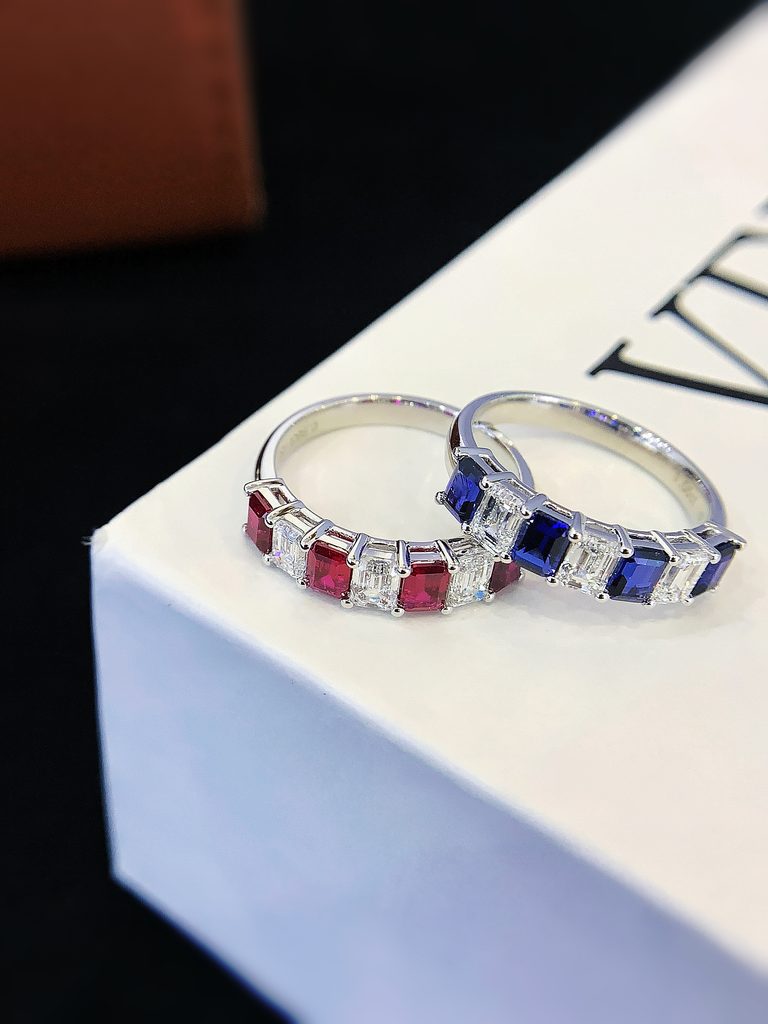
Bridal jewelry is the core profit category of most boutique jewelers, occupying more than half of annual sales volume. Consumers have extremely high requirements for the quality, design, and cost performance of bridal rings, so selecting high-quality suppliers to cooperate on wholesale bridal ring sets directly determines the core competitiveness of boutique jewelry stores.
When signing contracts for wholesale bridal ring sets, jewelers need to focus on design uniqueness, diamond matching consistency, and finished product durability. High-quality lab diamond bridal ring sets require strict matching of diamond color, clarity, and cutting parameters for paired rings, ensuring consistent brilliance and visual effect of wedding rings and engagement rings. As a manufacturer, we adopt unified 3EX cutting standards and consistent parameter screening for all matched bridal diamonds to avoid color difference and brightness gap in paired rings.
In terms of design, formal suppliers should support both classic universal bridal ring styles and customized exclusive designs, helping boutique jewelers form differentiated product advantages. The contract needs to stipulate the update cycle of wholesale bridal ring sets, requiring suppliers to launch new seasonal styles regularly to help jewelers keep up with wedding jewelry trend changes. In addition, the contract should clarify the after-sales maintenance service cycle for bridal ring sets, providing long-term free polishing, size adjustment, and inlay reinforcement services, which can help boutique jewelers improve customer repurchase rate and word-of-mouth evaluation.
Cooperate With Professional Mens Wedding Band Companies to Enrich Product Line
With the diversification of wedding consumption demand, men’s wedding bands have become an important growth point of boutique jewelry retail business. More and more consumers pay attention to the design sense, comfort, and texture of men’s wedding rings, which makes it necessary for boutique jewelers to cooperate with professional and formal mens wedding band companies to enrich their product line and expand market share.
Professional mens wedding band companies have mature production processes and exclusive design systems for men’s jewelry, which are different from women’s delicate jewelry production standards. Men’s wedding bands require higher wear resistance, structural stability, and wearing comfort. In the contract signing process, jewelers need to verify the production standards of suppliers’ men’s bands, including metal material hardness, ring inner wall polishing technology, and structural firmness of inlaid diamonds, to ensure the products meet the long-term wearing needs of male consumers.
In addition, cooperating with standardized mens wedding band companies can provide diversified product styles, including minimalist plain rings, subtle diamond inlaid rings, personalized carved rings, and vintage texture rings, helping boutique jewelers cover different consumer groups. The contract should clarify the independent quality inspection standards for men’s wedding bands, separate from women’s jewelry inspection standards, and formulate targeted after-sales guarantee terms. Rich men’s wedding band products can effectively enrich the store’s bridal jewelry matrix, increase customer unit price, and enhance the overall market competitiveness of boutique jewelers.
Strengthen Intellectual Property and Design Protection in Supplier Cooperation
Differentiated original design is the core survival advantage of boutique jewelers in the competitive jewelry market. Many small jewelry brands have suffered huge losses due to supplier design plagiarism and private mass sales of customized styles. Therefore, in addition to quality and after-sales terms, the contract must add strict intellectual property protection clauses to protect the exclusive design rights of boutique jewelers.
The contract should clearly stipulate that all customized styles, exclusive designs, and private mold products provided by jewelers are exclusively owned by the jewelry brand. Suppliers are prohibited from selling, copying, or providing the same styles to other customers in any form. At the same time, it is necessary to clarify the liability for breach of contract of design plagiarism, requiring suppliers to pay high liquidated damages once private plagiarism and sales are found, and recall all infringing products.
For boutique jewelers who independently develop new styles and cooperate with manufacturers for mass production, the contract should also specify the confidentiality obligations of production drawings, mold data, and product prototypes. Professional manufacturers will establish exclusive file management mechanisms for exclusive customer styles to ensure zero leakage of design information. Perfect intellectual property protection clauses help boutique jewelers maintain long-term design differentiation and avoid homogeneous competition in the market.
Optimize Batch Order and Quality Supervision Mechanisms for Stable Cooperation
Stable batch order management is the key to sustainable cooperation between boutique jewelers and lab diamond suppliers. After confirming all core contract clauses, jewelers also need to lock in batch production inspection standards, delivery cycle stability, and price adjustment mechanisms in the contract. For small-batch customized orders, the contract should stipulate free sample confirmation rules before mass production, ensuring that the finished product effect is consistent with customer expectations.
In terms of price mechanism, formal manufacturer contracts will formulate stable tiered pricing standards. With the increase of order quantity, the unit price of lab diamonds and finished jewelry will be appropriately optimized, helping boutique jewelers reduce procurement costs and increase profit margins. Meanwhile, the contract should limit the frequency and scope of raw material price adjustments, avoiding arbitrary price increases by suppliers that affect retail pricing stability.
In terms of quality supervision, suppliers should be required to provide batch production inspection reports, including diamond grading re-inspection data, metal material component test reports, and finished product durability test results. Boutique jewelers can conduct random sampling inspections of batch goods regularly, and all unqualified products shall be returned and replaced free of charge by the supplier. A complete set of order supervision mechanisms ensures stable product quality and controllable costs, helping boutique jewelers build long-term and stable supplier cooperative relationships.