Warning Signs Must Check Before Working With Lab Diamond Suppliers
The expanding market for laboratory‑produced diamonds opens fresh revenue paths for independent jewelers, boutique operators and retail stores across global markets. As consumer appetite shifts toward accessible luxury pieces, many retailers turn to bulk procurement to fill inventory and meet growing customer demand. Yet rapid market expansion also draws unqualified intermediaries and opportunistic traders who cut corners on quality, documentation and business integrity. Even experienced buying teams can face costly setbacks if they skip thorough background checks before formal cooperation. Working with unreliable sources may trigger inconsistent stock quality, customer complaints, returned orders, regulatory non‑compliance and long‑term damage to hard‑earned store reputation. Every jewelry business needs practical evaluation standards to filter suitable collaborators before signing large purchase contracts.
Unrealistic pricing as a critical assessment benchmark
Sharp price fluctuation is one of the most intuitive signals during supplier screening. In today’s market landscape, production costs for lab‑grown diamonds follow relatively predictable ranges based on carat weight, color grade, clarity rating and cutting craftsmanship. CVD and HPHT growth processes both carry fixed overhead covering reactor operation, raw carbon material, skilled labor and post‑growth polishing. Any offer sitting far below widely accepted market averages deserves deep scrutiny instead of immediate excitement over apparent profit margins. Some operators advertise extremely low unit prices to attract new buyers, only to deliver downgraded stones with heavy visible inclusions, poor light performance or stones mixed with diamond simulants such as cubic zirconia.
When browsing offers for lab diamond wholesale, buyers should cross‑reference quotations against multiple comparable market sources, rather than making decisions based solely on one attractive price sheet. Many new market entrants mistake temporary inventory clearance pricing for standard market value. Reputable partners can provide reasonable price breaks for higher‑volume orders, but they will never quote figures that defy basic production economics. Watch for sales tactics that push for fast deposit payment before you examine physical merchandise. Traders pushing urgent limited‑time discounts often attempt to prevent buyers from completing full verification steps. Slow, methodical price comparison protects your cash flow and prevents you from locking large capital into defective stock that cannot sell through normal retail channels.
Certification opacity and documentation gaps
Valid third‑party grading documentation forms the backbone of trustworthy diamond transactions. Professional grading laboratories record measurable stone characteristics including exact carat weight, color, clarity, cut grade, growth technology and any post‑growth treatments. Every legitimate report carries a unique identification number which can be cross‑checked through official lab online databases. Problematic suppliers deliver cropped report screenshots, certificates issued by obscure unrecognized labs, or documentation numbers which return blank results during online verification. In worse scenarios, grading paperwork describes high‑grade parameters, yet actual delivered stones fail to match listed specifications. Laser girdle inscriptions should align precisely with certificate serial numbers; mismatched or missing inscriptions create another layer of risk for wholesale buyers.
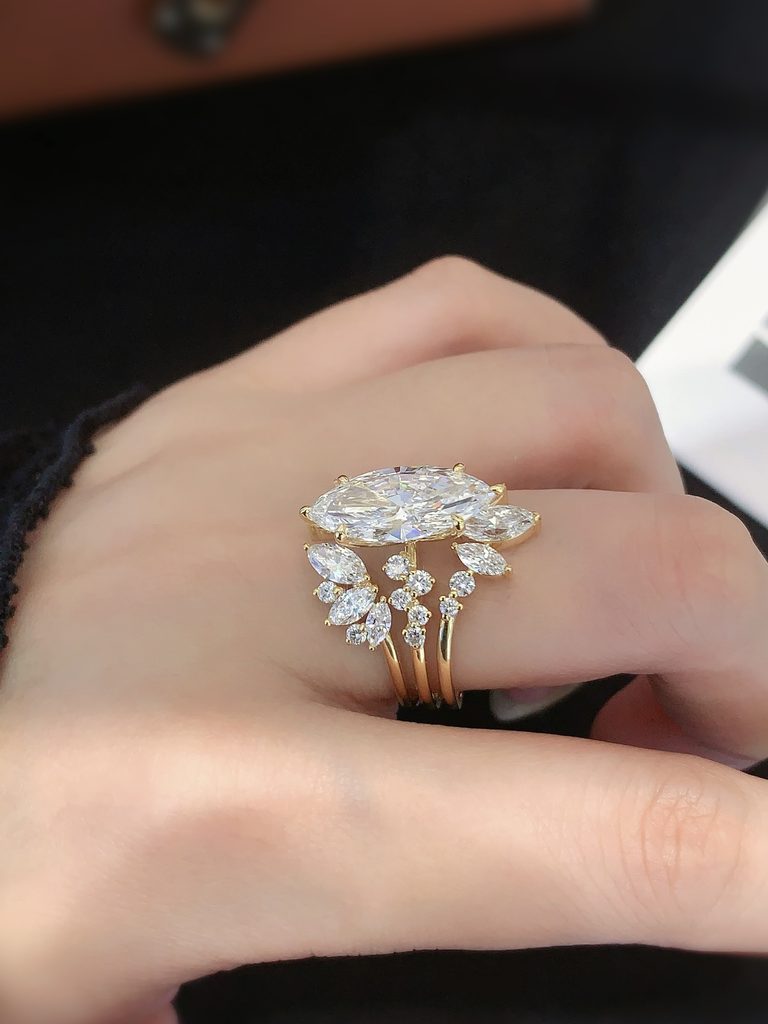
The risk extends further when you source finished jewelry goods. For participants purchasing lab created diamond jewelry wholesale, confirmation is required not only for center stones but also accent melee diamonds set inside finished pieces. Some suppliers submit high‑quality samples for certification testing, then fill bulk orders with ungraded replacement stones after contracts are confirmed. Reputable partners willingly share full‑size original PDF reports, allow you to validate report numbers independently and disclose any annealing or color‑enhancement treatments applied during manufacturing. Avoid any counterpart who repeatedly delays sending complete documentation or insists physical goods must be paid for in full before releasing grading files. Incomplete records create compliance exposure, since regional trade rules demand accurate disclosure of lab‑created status on sales invoices and retail product labeling.
Refusal of physical sample evaluation and inspection barriers
Physical sample review remains irreplaceable even with high‑resolution digital photos and complete grading files. Screen images can hide surface scratches, uneven facet alignment, bad polish performance and subtle color tinting visible only under real‑world lighting conditions. Many bad‑faith vendors actively resist sample shipment requests. They may state samples are unavailable, demand unreasonably high sample fees, or argue digital materials provide sufficient evidence for placing large orders. Without hands‑on examination, buyers cannot assess real‑world sparkle, metal finishing, setting stability and craftsmanship quality on finished jewelry items.
Sample shipment builds mutual trust for long‑term collaboration. Responsible operators understand that retailers need to examine material quality before committing capital to substantial inventory. If a partner avoids sending physical goods for your evaluation, this falls under partner warning signs that you should never overlook. A small sample order allows you to run internal quality checks, test stone performance under retail store lighting and review packaging standards before scaling order quantities. You can also forward sample stones to independent third‑party gem labs for secondary verification, eliminating reliance solely on documents provided directly by your selling party. Refusal to facilitate sample assessment frequently signals hidden quality issues that would become obvious once you hold the product in hand.
Ambiguous contract terms and problematic payment conditions
Business terms written inside sales agreements reveal much about a supplier’s operational integrity. Risky trading partners present vague contracts with loosely defined quality standards, unclear return windows for misrepresented merchandise and undefined liability for non‑conforming shipments. Some push for full advance wire transfer with zero protection for purchasing parties. Once funds clear, communication fades away, or delivered goods diverge significantly from agreed specifications. Clear contracts must spell out acceptable quality tolerances, allowed rejection criteria, timelines for replacement of defective goods, shipping responsibility and resolution pathways for disputes.
Watch for pressure tactics designed to rush you past careful contract reading. Traders might claim special pricing expires within hours or stock will be allocated to other buyers unless you transfer payment quickly. Legitimate supply partners encourage you to read every clause thoroughly and welcome reasonable negotiation on commercial terms. Confirm return policies specifically cover stones which fail third‑party verification, not only visibly broken items. Without written protection, retailers absorb all losses when parcels arrive containing misgraded or misrepresented inventory. Keep every email conversation, quotation sheet and contract document stored securely, as these records become essential reference material if conflicts emerge further down the line.
Operational transparency and verifiable business background
A trustworthy diamond‑related operation maintains traceable business background. Reliable participants can share valid business registration details, facility descriptions, and provide references from existing long‑term retail clients. They support virtual video tours of production or storage premises upon reasonable request. Vendors operating purely through anonymous messaging platforms, with no verifiable physical location, raise considerable suspicion. Newly established traders without industry track records may lack stable supply pipelines and quality‑control workflows.
Take time to speak with other jewelry operators regarding their real‑world purchasing experience. Feedback from peer retailers highlights recurring issues that public marketing materials will never mention. Some suppliers outsource most production work through multiple unknown middlemen, creating layers of opacity between original stone growth and final delivery. Every extra intermediary increases opportunities for quality switching, mislabeling and documentation manipulation. When you cannot confirm who handles cutting, polishing and setting processes, you lose oversight over critical quality‑control steps.
Practical workflows to avoid vendor scams in day‑to‑day sourcing
Building structured sourcing workflows shields your enterprise against common market pitfalls. Start with small‑volume trial orders regardless of how persuasive sales presentations appear. Treat initial purchases as real‑world quality audits rather than direct large‑scale inventory fills. Upon receiving shipments, inspect each representative piece under loupe magnification, cross‑check stone inscriptions with grading documents, and spot‑check random items from bulk parcels. Random spot checks stop you from being fooled by perfect sample units while remaining unaware of inconsistent quality across mass‑produced batches.
Build standardized checklists for every incoming wholesale parcel. Confirm stone parameters match paperwork, examine metal alloy quality on finished jewelry, inspect setting security and review packaging condition. Reserve part of your order budget for independent third‑party gemological testing, especially for high‑carat‑size stones. Even established suppliers can experience human error within their sorting departments, so outside verification offers valuable safety nets. Document every non‑conforming finding and communicate clearly with your contact immediately whenever discrepancies surface.
Keep updating your internal risk assessment framework as market conditions shift. New players continuously enter the lab‑grown diamond space, and previously stable sources can degrade their quality standards under inventory pressure. Do not fall into complacency simply because one early‑stage order arrived in good condition. Re‑run key verification steps periodically for repeat orders. This ongoing diligence protects your retail brand, preserves consumer trust and helps you capture the commercial advantages lab‑diamond markets deliver without unnecessary exposure to preventable business losses.
Word count: 1342